
Automation trust assessment
Find Out Why Your Automation Cannot Be Trusted
Before you buy testing services, rewrite your framework, or rerun the suite again, understand exactly what is creating false confidence and what it will cost to fix.
Experienced improving systems for







QA ALIGN Trust Engine
Turn raw automation output into a release decision.
CI output is not useful until the failure has a name, a risk level, and a decision path. The Trust Engine turns framework evidence into a report leaders and engineers can act on.
- Product bug or framework noise?
- Locator debt, data state, or environment drift?
- Safe to ship, or blocked by false confidence?
- 01 Observe
Framework files, test patterns, CI output, reports, and artifacts are read as evidence.
- 02 Measure
The assessment scores trust, release impact, issue weight, and cost to fix.
- 03 Triage
Failures are separated into signal, risk, noise, data, state, and governance gaps.
- 04 Decide
The report returns a GO, WARN, or BLOCK decision with the reason attached.
- Trust Score
- Risk Map
- Fix Cost
- GO / WARN / BLOCK
How QA ALIGN works
Assess first. Remediate second. Verify before anyone calls it fixed.
The assessment is the productized diagnostic. Services become the downstream fulfillment path after the report identifies the issue, cost, and priority order.
- 01 Assess
Read the framework, CI signals, artifacts, and release decision rules before remediation starts.
- 02 Find
Identify the highest-risk pattern creating false confidence or release noise.
- 03 Prioritize
Rank findings by release impact, trust delta, and cost to fix.
- 04 Remediate
Turn the finding into an engineer-ready fix card with files, line targets, and guardrails.
- 05 Verify
Rerun the assessment so trust moves only when the framework evidence changes.
- 06 Release
Use GO, WARN, or BLOCK from machine-readable evidence instead of a meeting-room guess.
Evidence preview
A tour of the process from 20% to 94% release confidence. The messy truth.
We first discover where the issues are, then deliver a clear summary of the risk, the report, the fix path, and the rerun evidence that shows what actually changed.
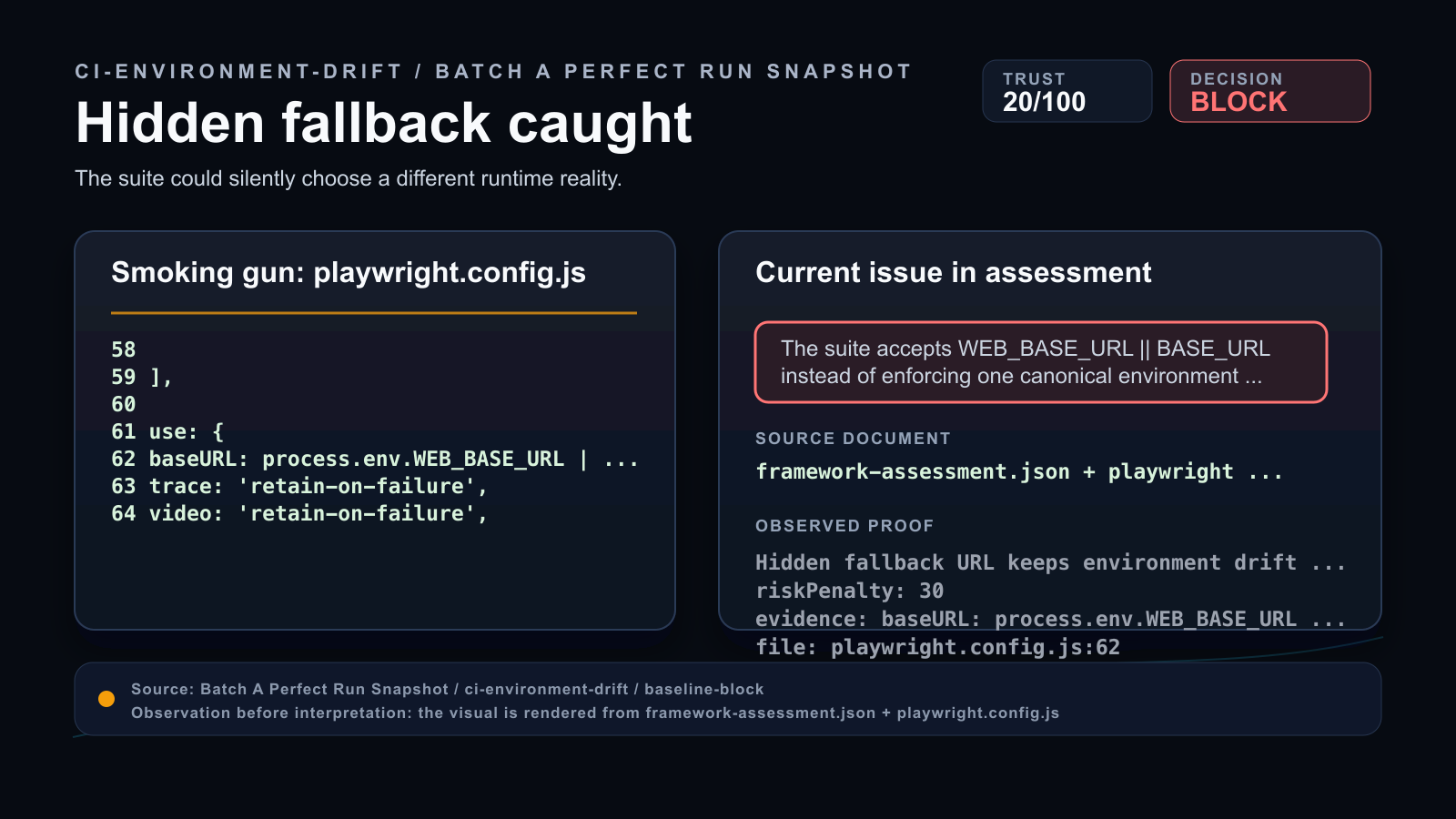
Environment contract validation so you can separate app risk from environment noise.
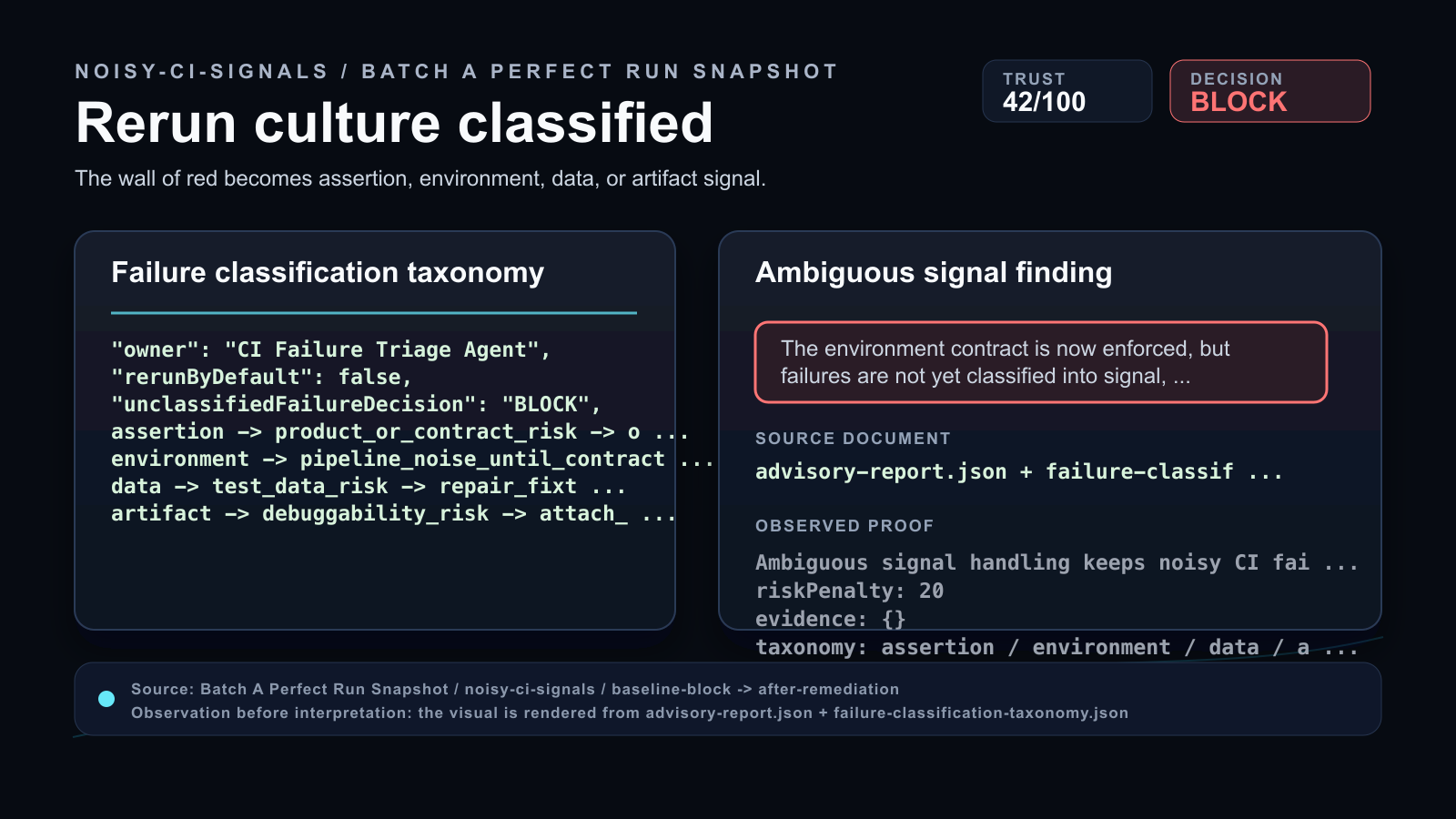
Artifact-driven triage so you can stop the morning-routine nightmare of blind reruns.
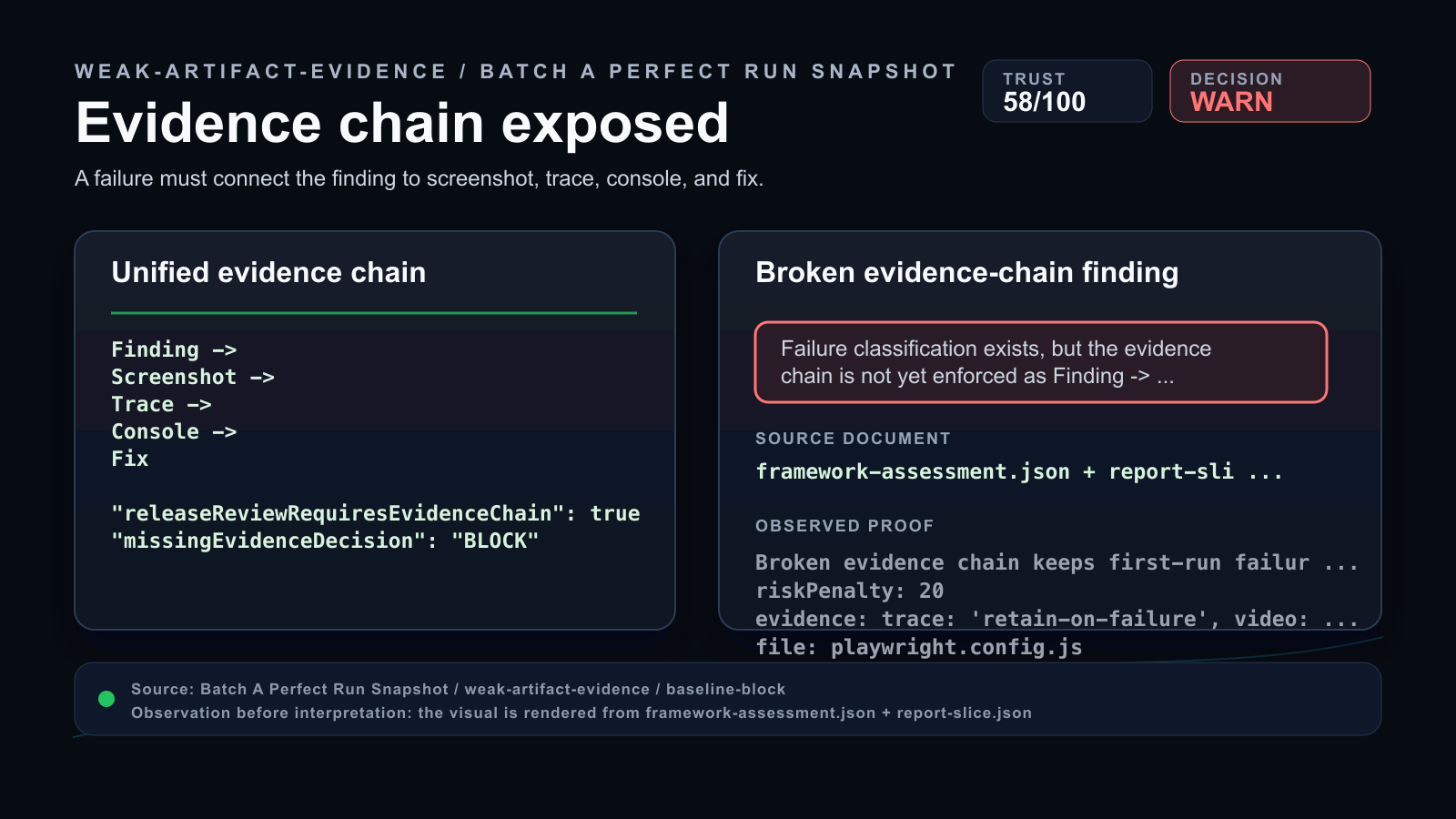
Structured trace/log evidence so you can debug from machine proof, not interpretation.
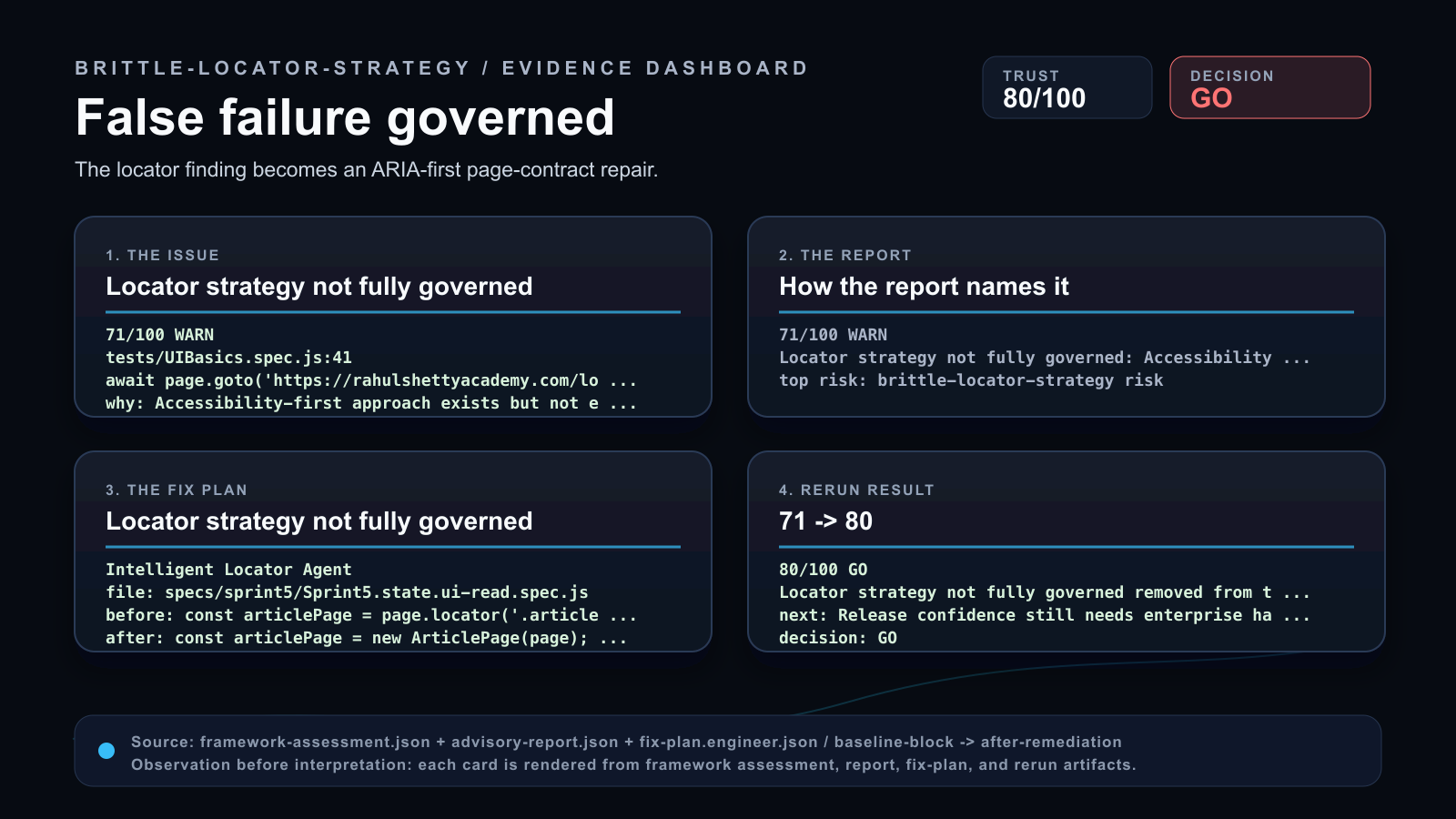
Robust selector generation so you can stop fixing false failures every time UI changes.
Automation Framework Trust Report
Get a trust level, issue breakdown, release decision, and remediation roadmap.
Need help fixing it?
Services are available after the assessment identifies the root cause.
QA ALIGN can help execute the remediation roadmap, but the first promise is still diagnosis: prove what is wrong before asking you to buy the fix.
Repair Framework Stabilization
Repair the contracts the assessment proves are weakening release trust.
Best fit: Flaky suites, brittle locators, state leaks, noisy CI, or artifact gaps.
Work includes: Fixture repair, locator governance, artifact contracts, state isolation, and release-gate hardening.
Proof: Before/after trust reports, engineer fix cards, and rerun evidence tied to the remediation path.
Validate API Reliability
Make API checks explain behavior, auth, data, and release impact.
Best fit: Teams whose UI automation hides product-contract, authentication, or data risks.
Work includes: Request and response contracts, auth-state validation, data setup controls, and failure classification.
Proof: Contract maps, assertion evidence, endpoint risk notes, and release-impact findings.
Govern Regression Strategy
Separate smoke, regression, and release gates so urgent risk surfaces earlier.
Best fit: Suites that are too slow, too broad, or too noisy to guide a release decision.
Work includes: Suite tiering, go/no-go gates, rerun policy, confidence thresholds, and CI signal cleanup.
Proof: Runtime profiles, release-gate reports, trust deltas, and decision-ready test lanes.
Support Managed QA Support
Use the assessment roadmap to guide focused QA support after the evidence is clear.
Best fit: Teams that need targeted execution help after the Trust Report names the priority order.
Work includes: Manual testing, automation support, triage ownership, regression coverage, and ongoing trust reviews.
Proof: Weekly signal summaries, issue routing, remediation backlog, and updated assessment evidence.