Modernize QA Without Losing Release Confidence
QA ALIGN starts by naming the failure pattern inside your automation system. Each assessment turns framework evidence into a trust level, a release decision, and a focused path to repair.
Start with the failure pattern you recognize
These cards are the QA ALIGN Visual OS: one governed object, one failure behavior, and one clear signal for what is breaking trust. The report pages then back the pattern with real framework artifacts.
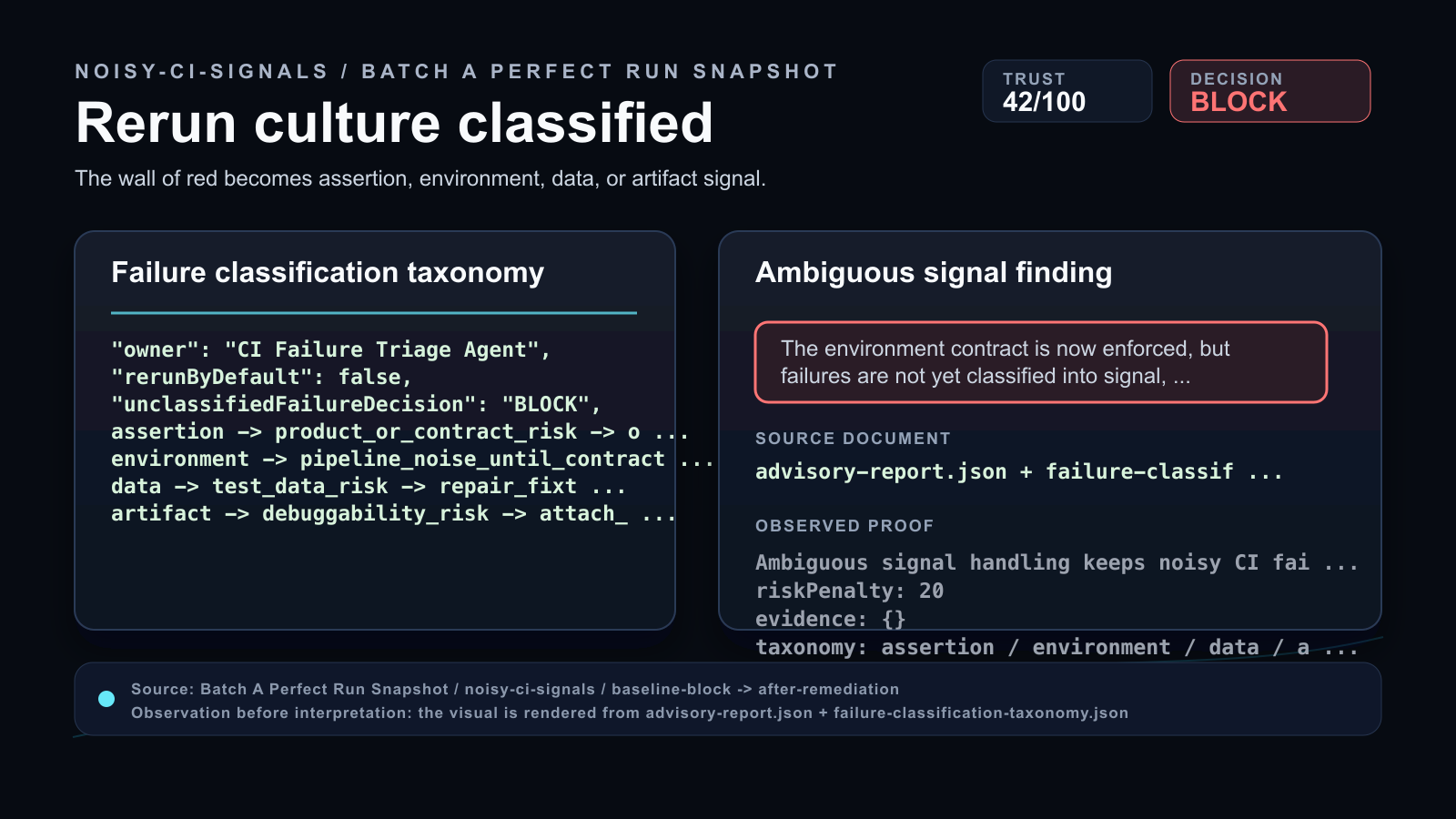
Stop Rerunning CI Failures That Cannot Explain Themselves
Ambiguous signal handling keeps noisy CI failures unresolved
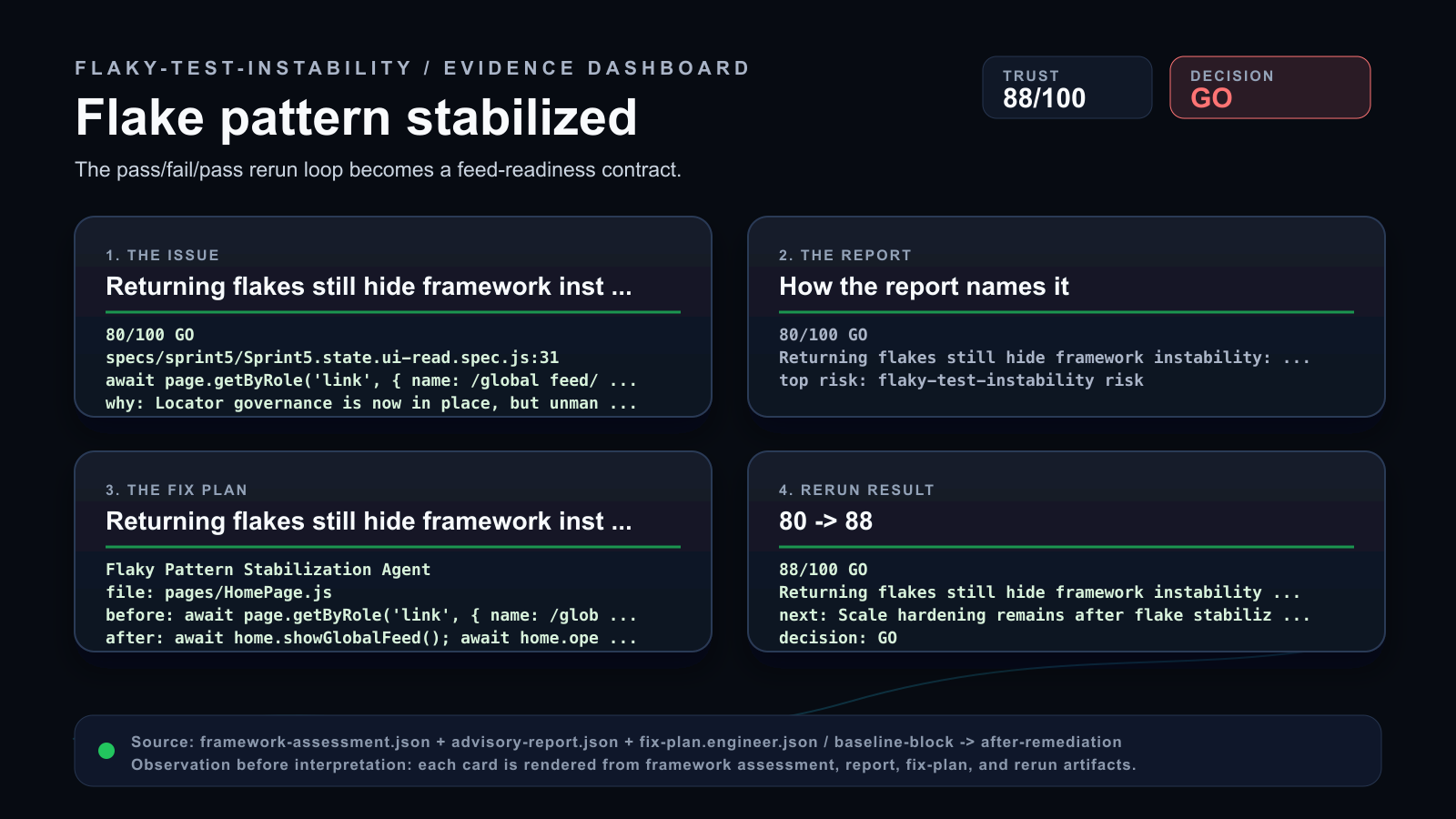
Find the System Patterns Behind Flaky Tests
Returning flakes still hide framework instability
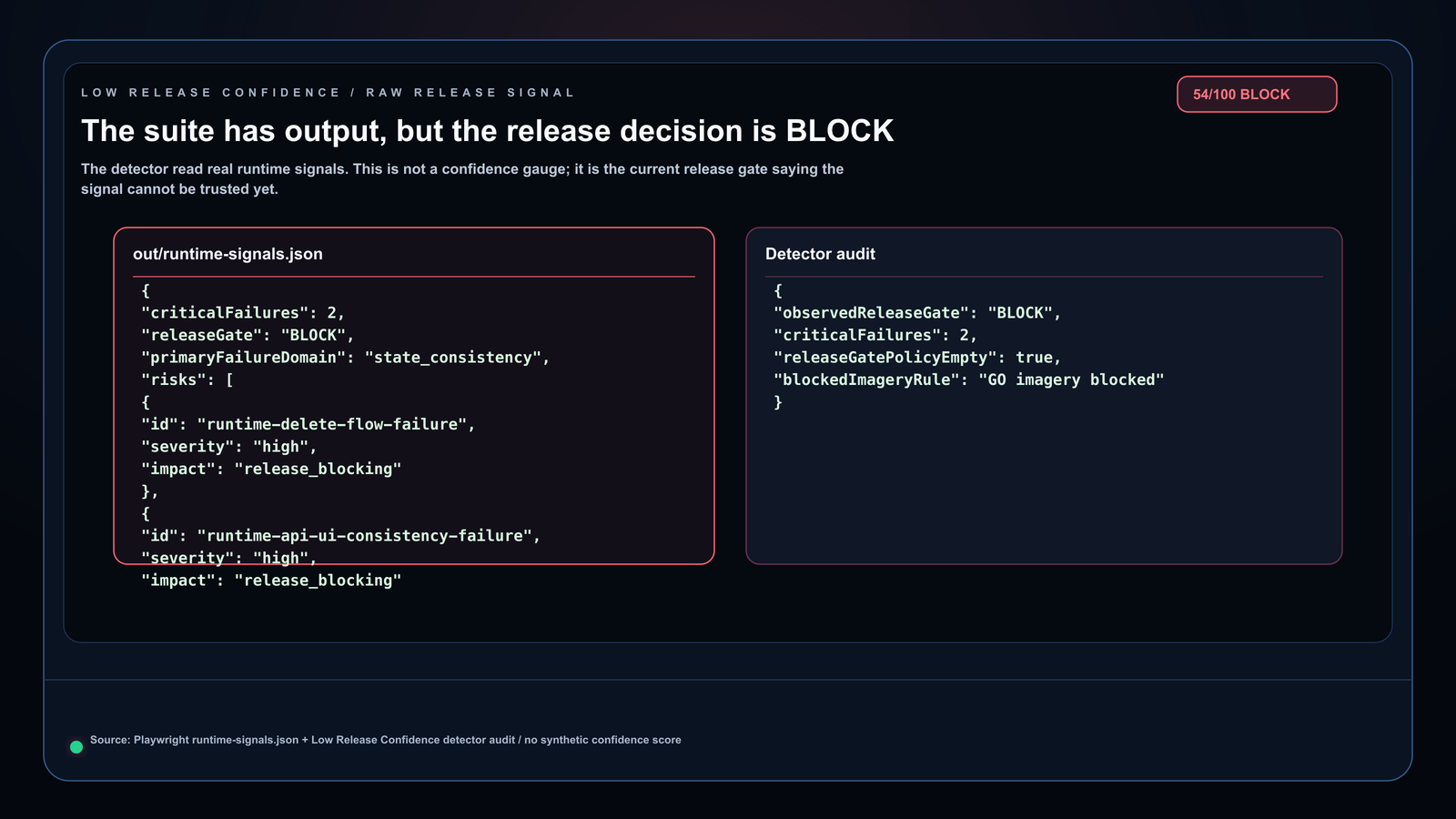
Turn Automation Signal Into Trustworthy Release Decisions
Environment contract partially enforced
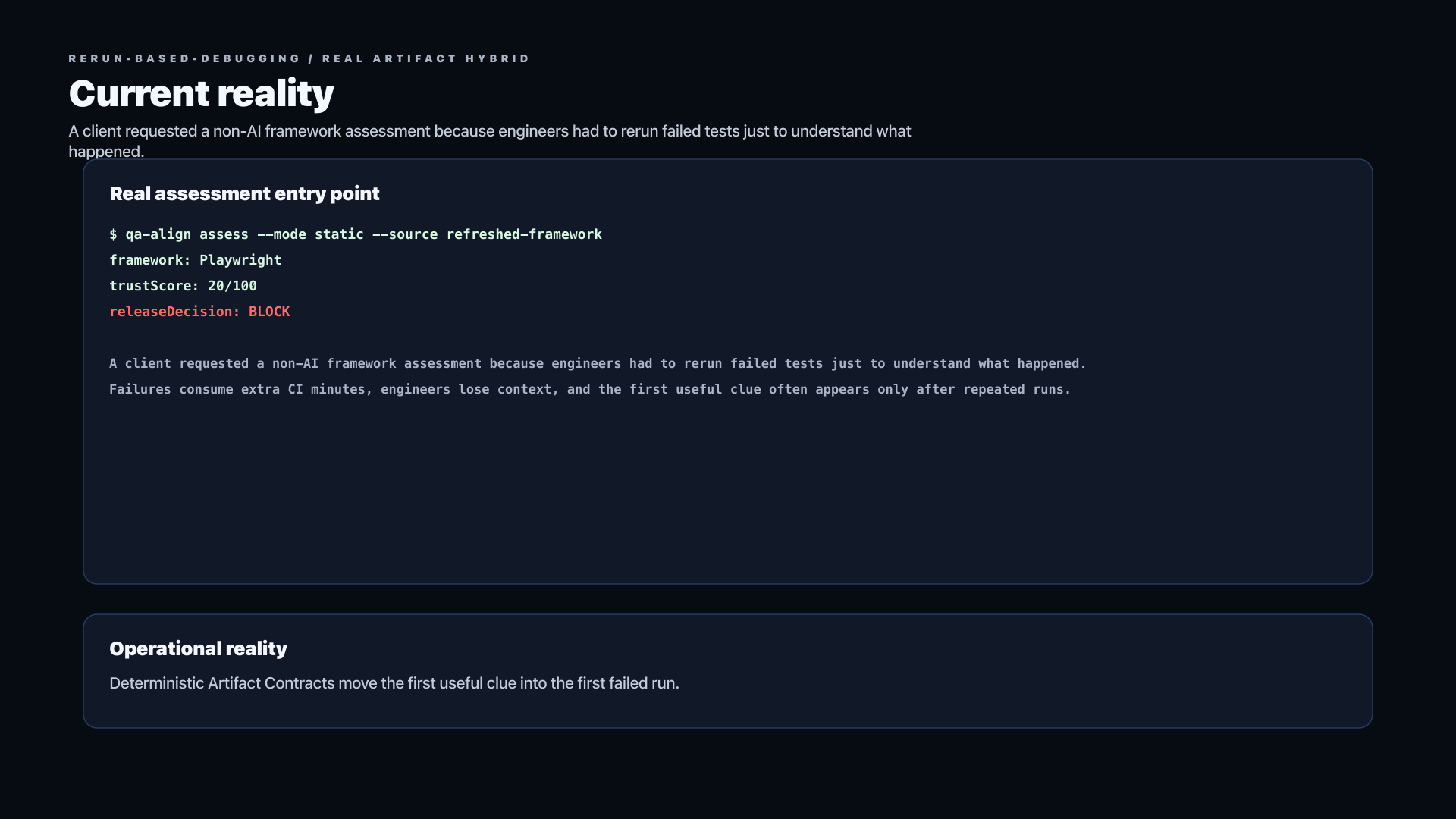
Stop Using Reruns as the Debugging Strategy
Environment contract partially enforced
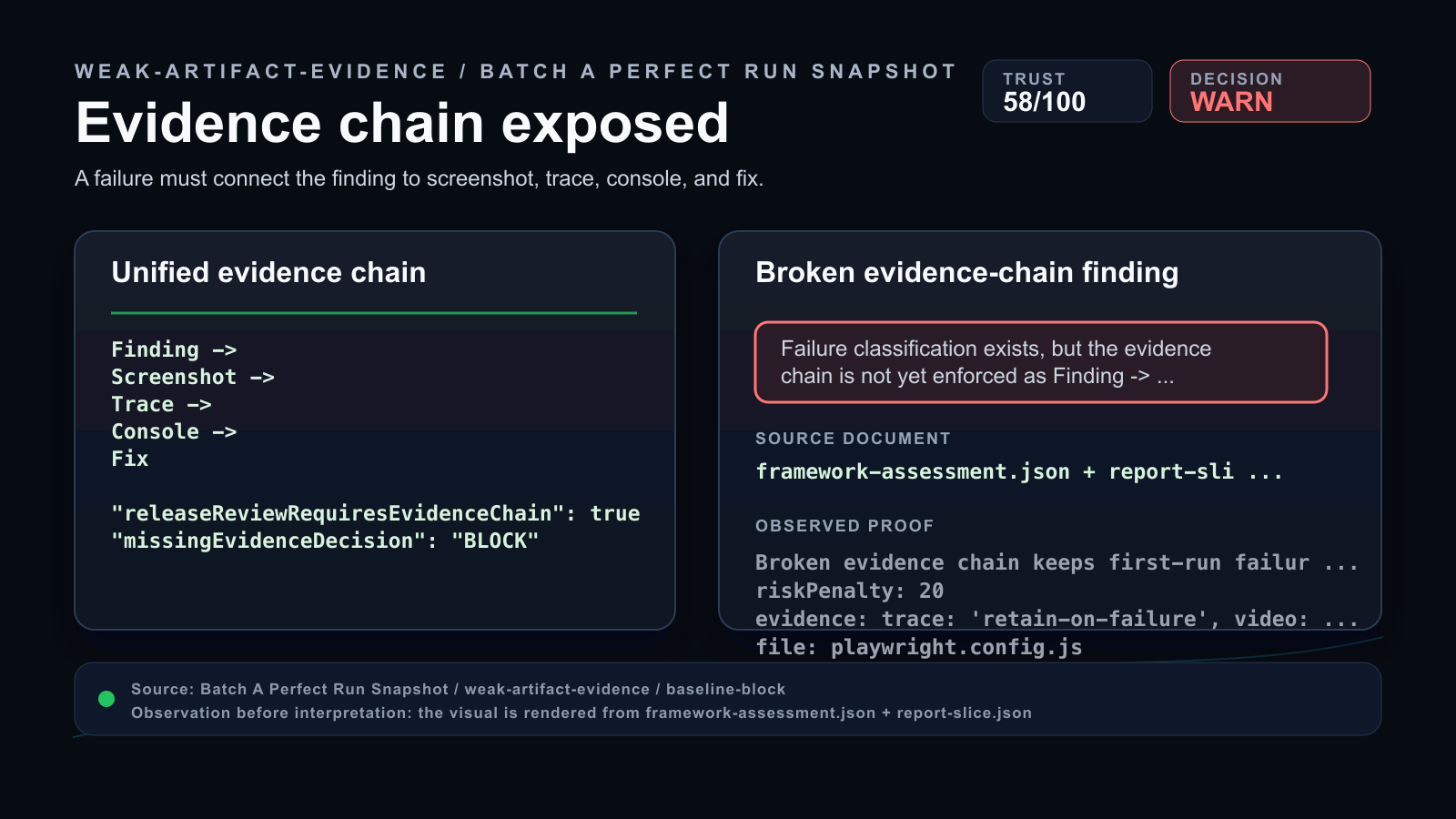
Stop Guessing at Failures with Deterministic Artifact Contracts
Broken evidence chain keeps first-run failures hard to prove
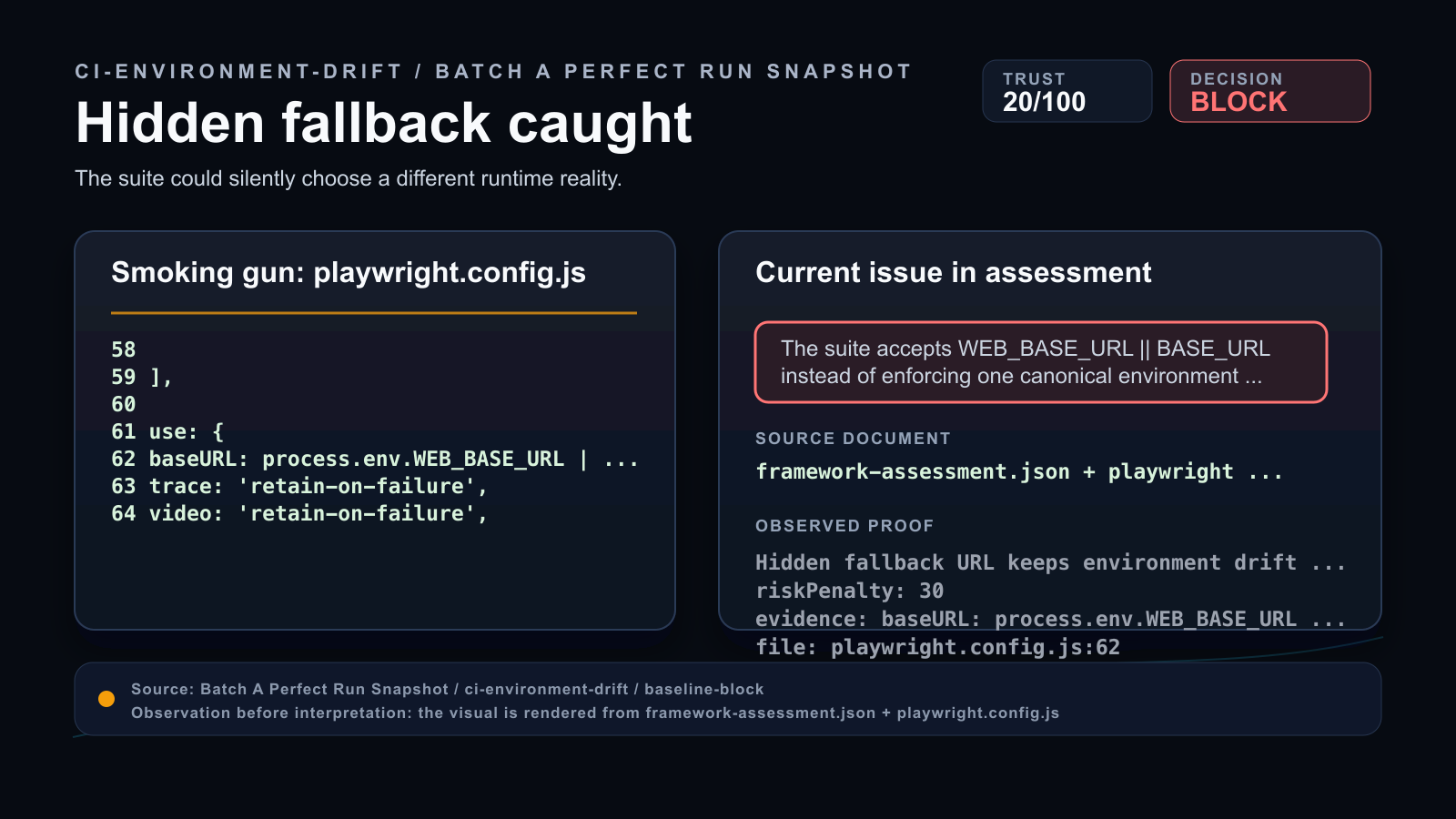
Eliminate the Confusion of Inconsistent CI Results
Hidden fallback URL keeps environment drift alive
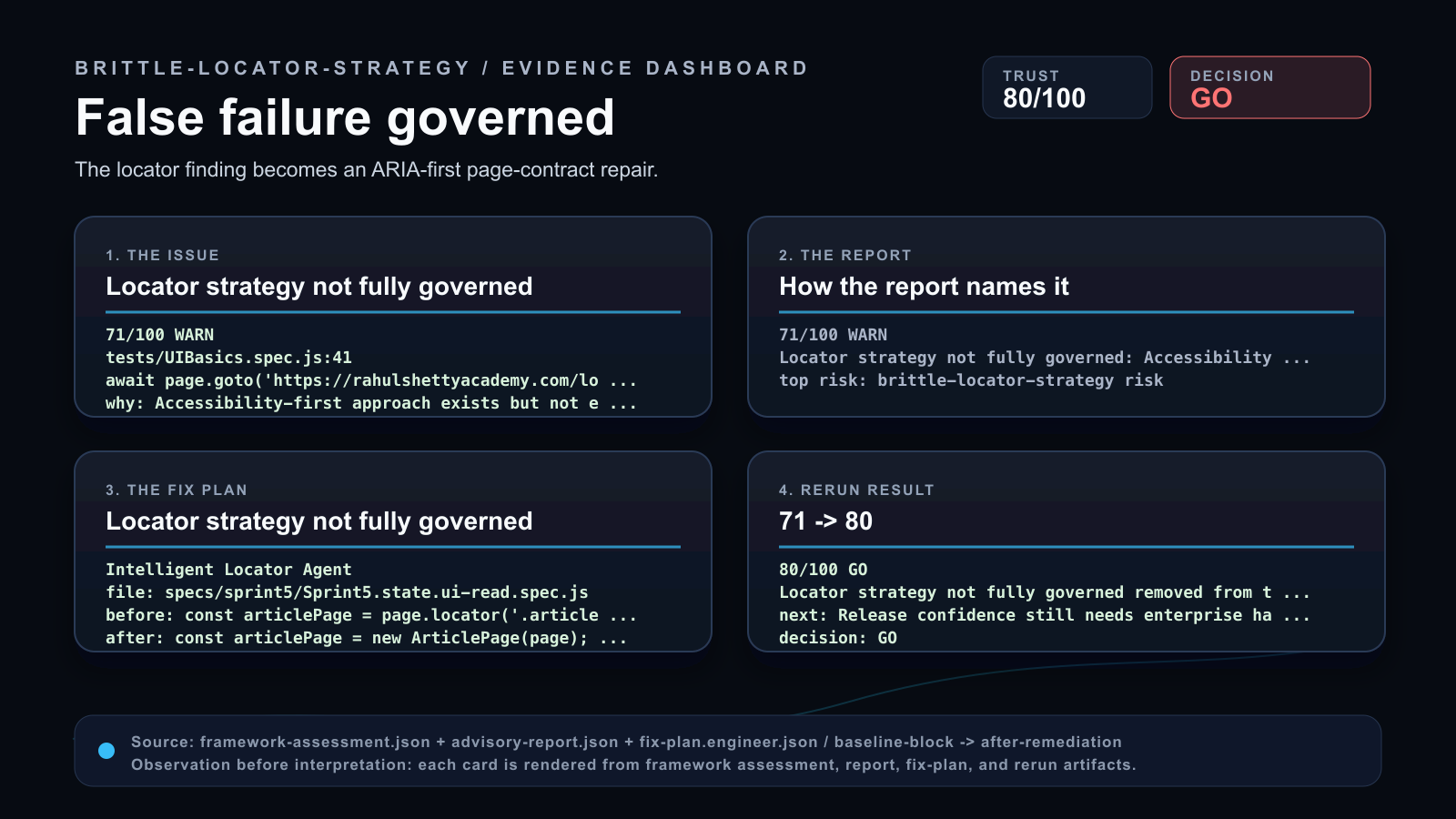
Replace False Failures with Robust Locators
Locator strategy not fully governed
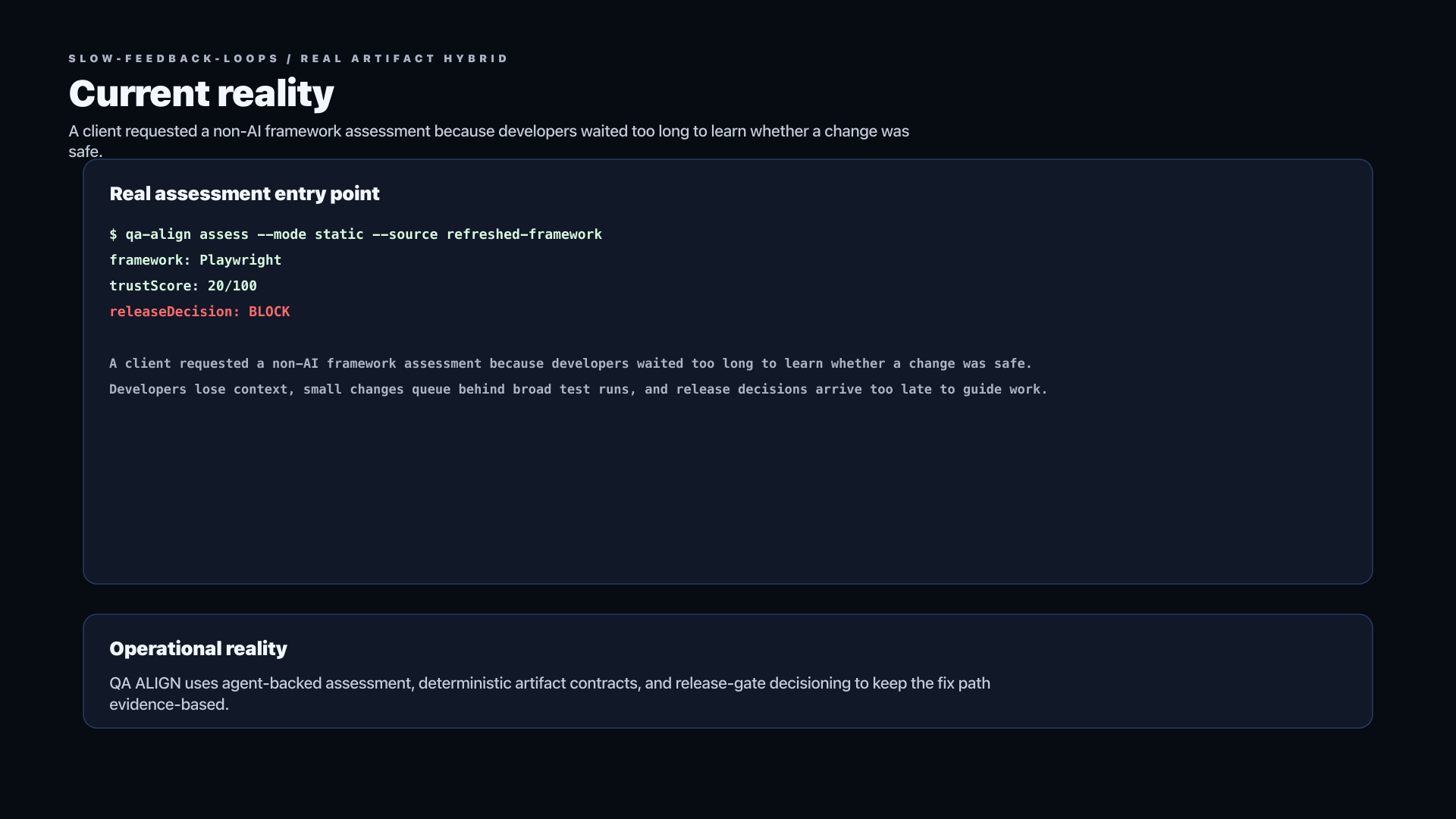
Shorten the Time Between Failure and Action
Environment contract partially enforced
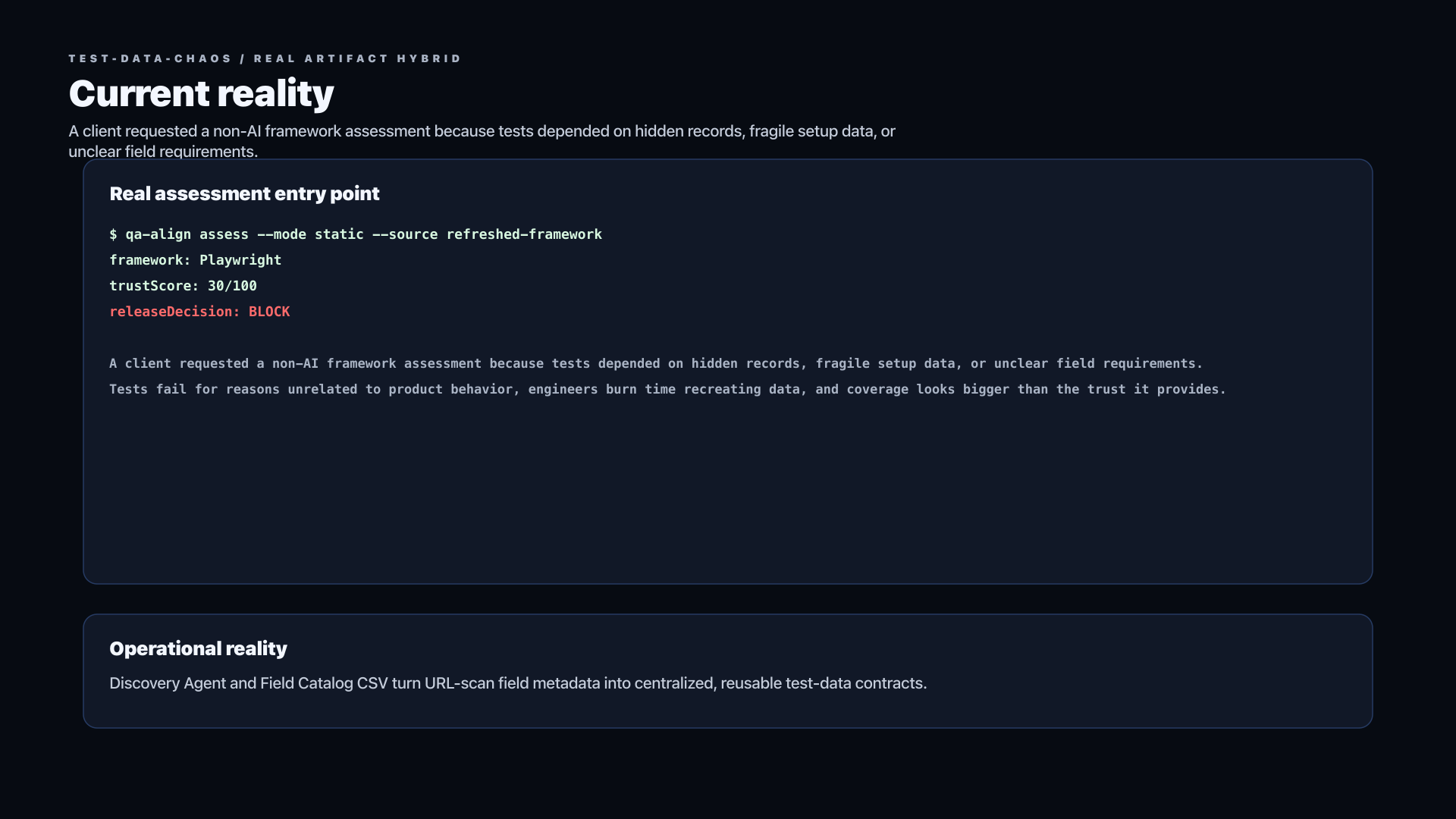
Eliminate the Hidden Dependencies in Your Test Data
Test data lifecycle not fully deterministic
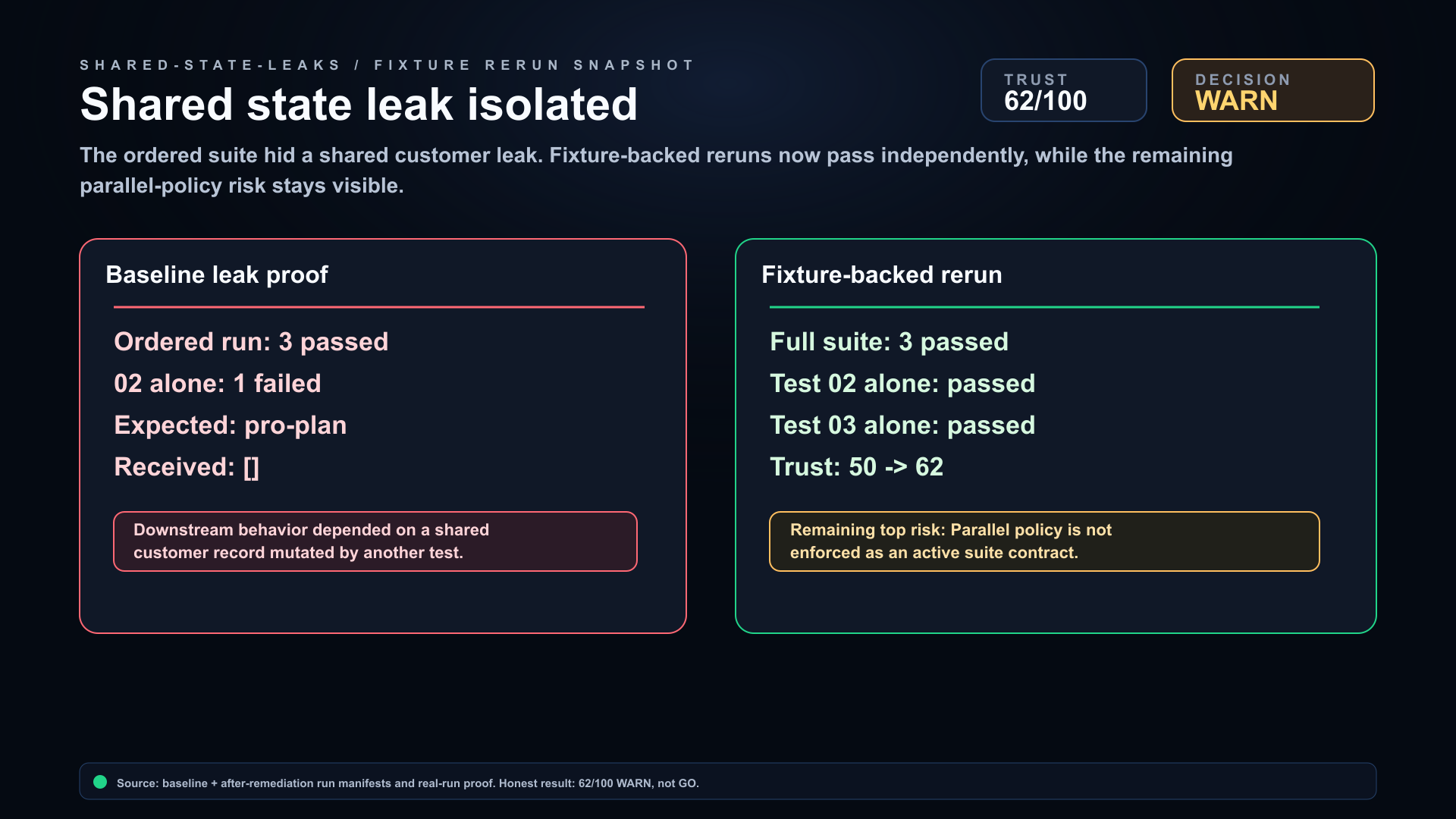
Stop Shared State Leaks from Polluting Release Signals
Shared customer state leaks across checkout tests
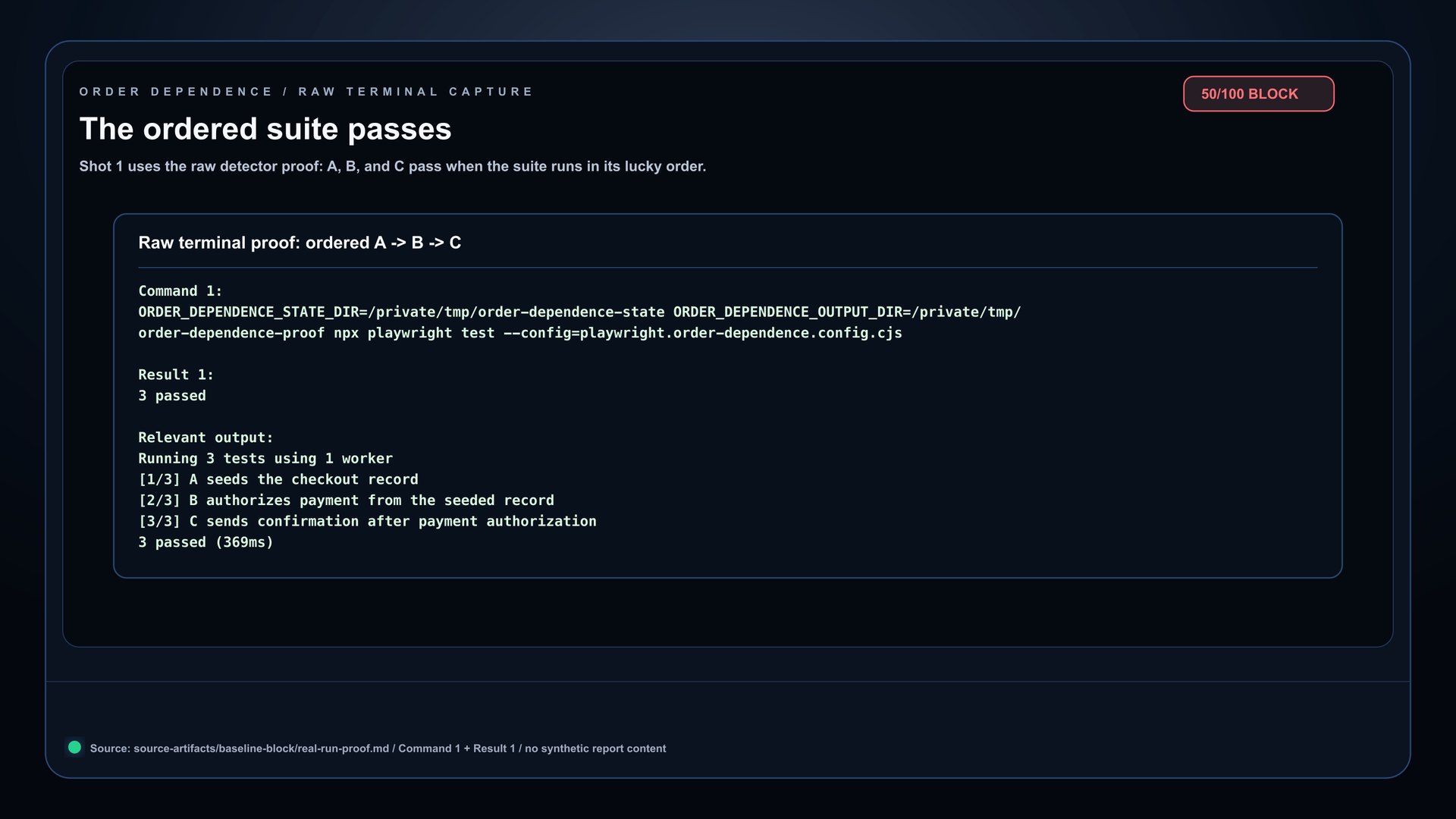
Identify the Hidden Sequence Risks in Your Test Suite
Lucky order hides sequence-dependent failures
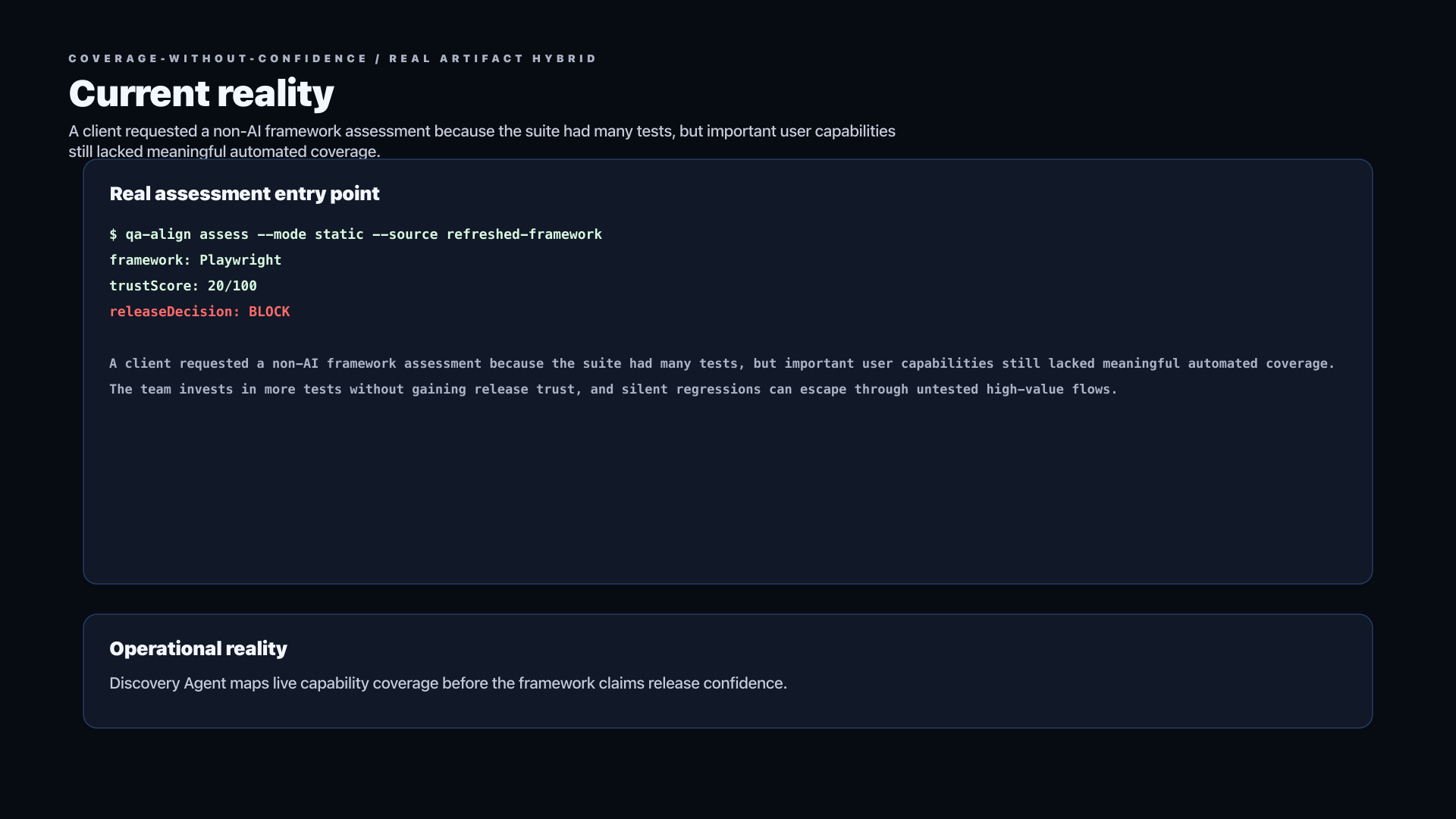
Find Out Why More Tests Are Not Creating More Trust
coverage gaps behind high test volume
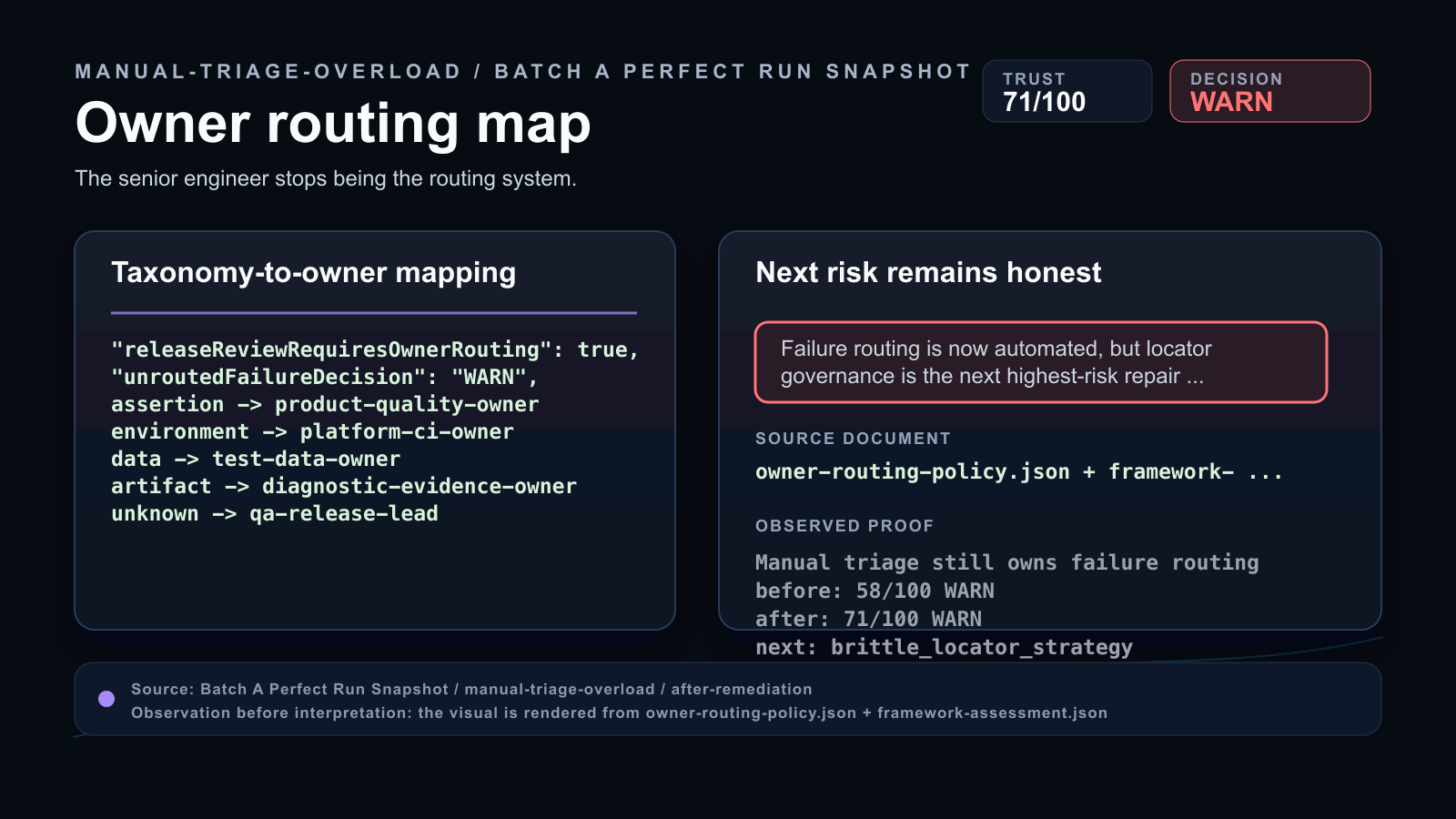
Stop the Burnout of Manual CI Failure Classification
Manual triage still owns failure routing
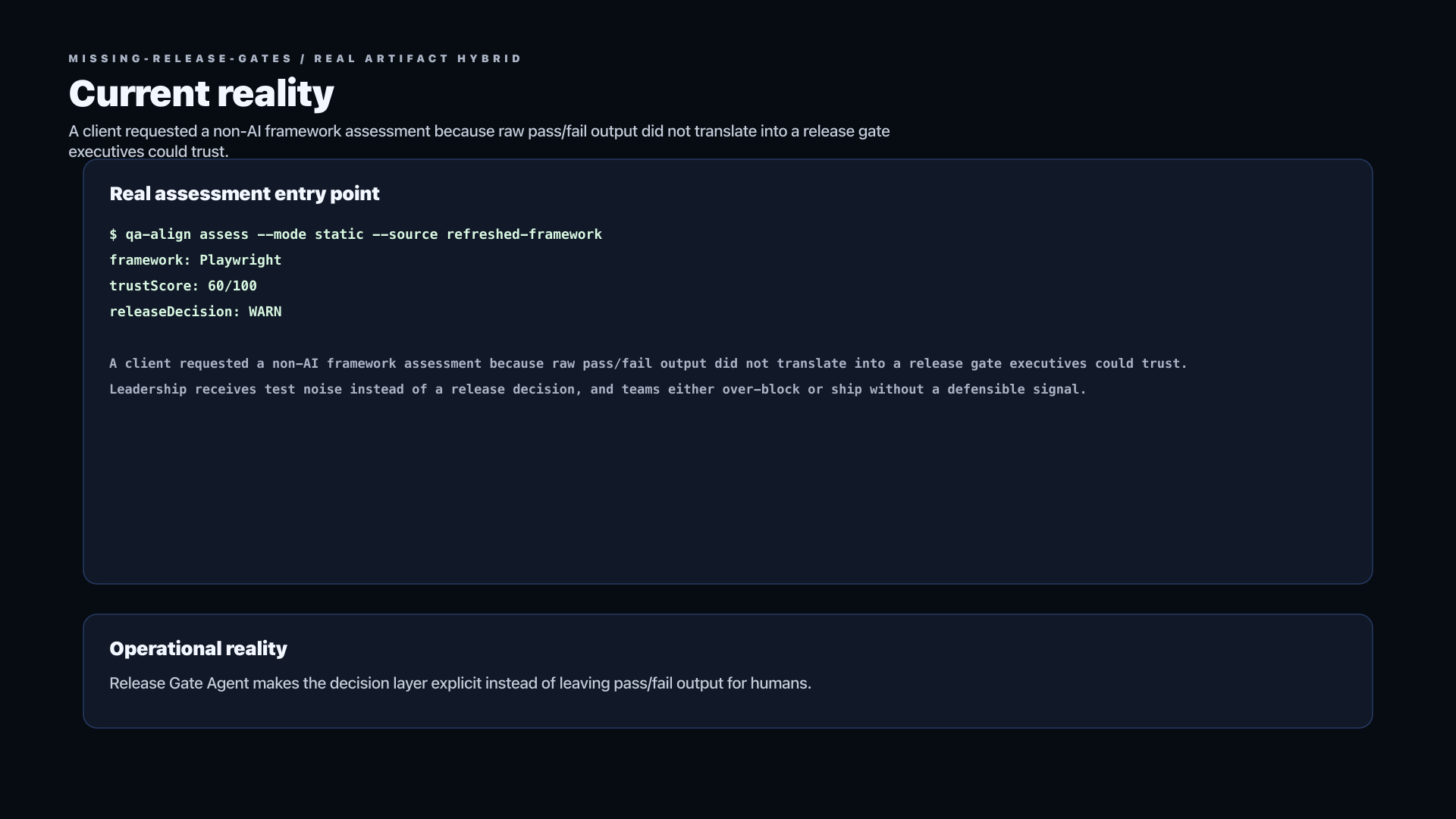
Implement the Decision Layer Your CI/CD Pipeline Is Missing
Release decision logic not consistently applied
Stop Brittle Assertions from Hiding Real Release Proof
For teams whose failures are technically correct but not useful enough to guide action.
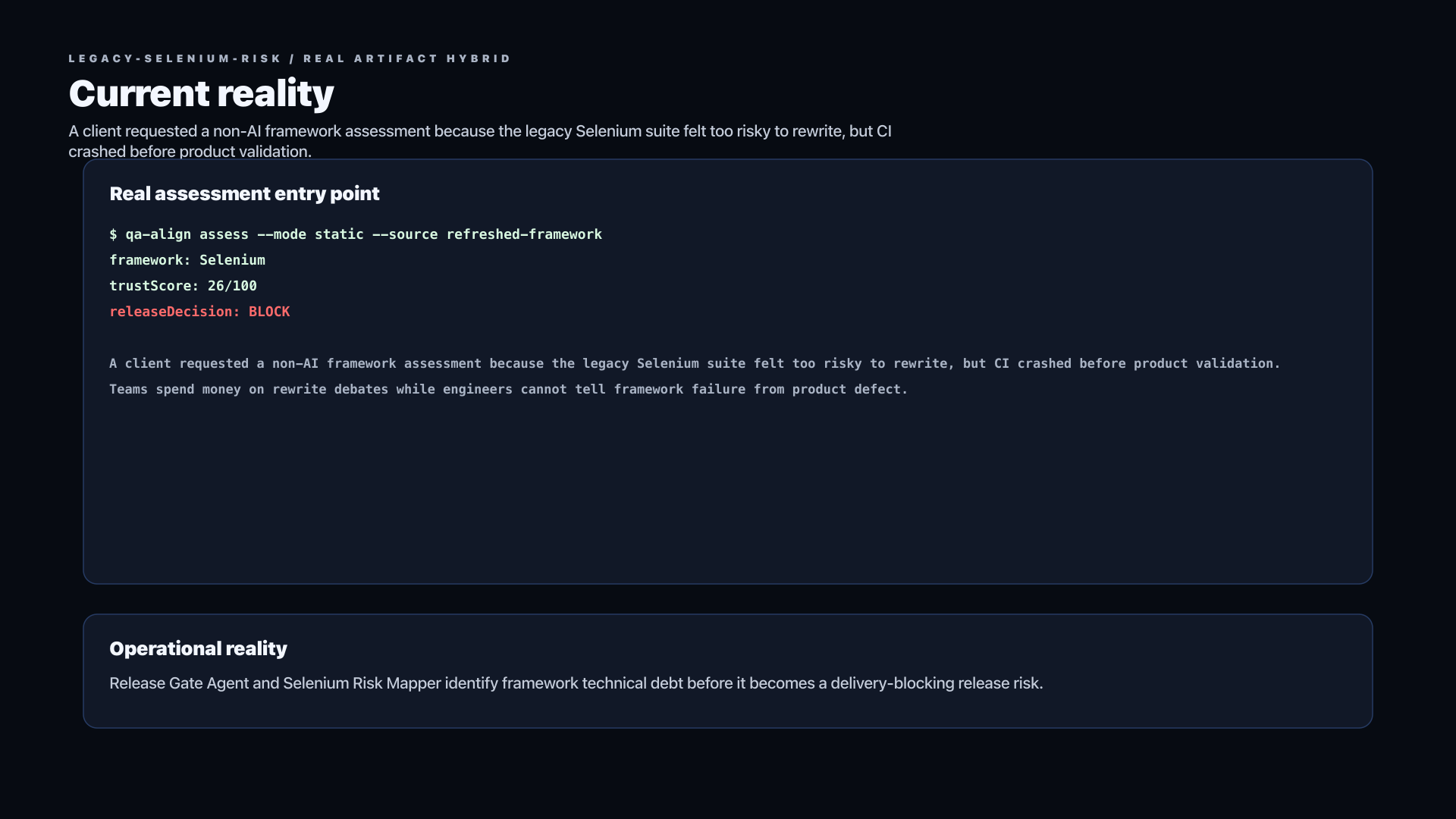
Turn Years of Selenium Coverage Into a Suite Your Team Can Maintain
selenium-parallel-overcommit-risk
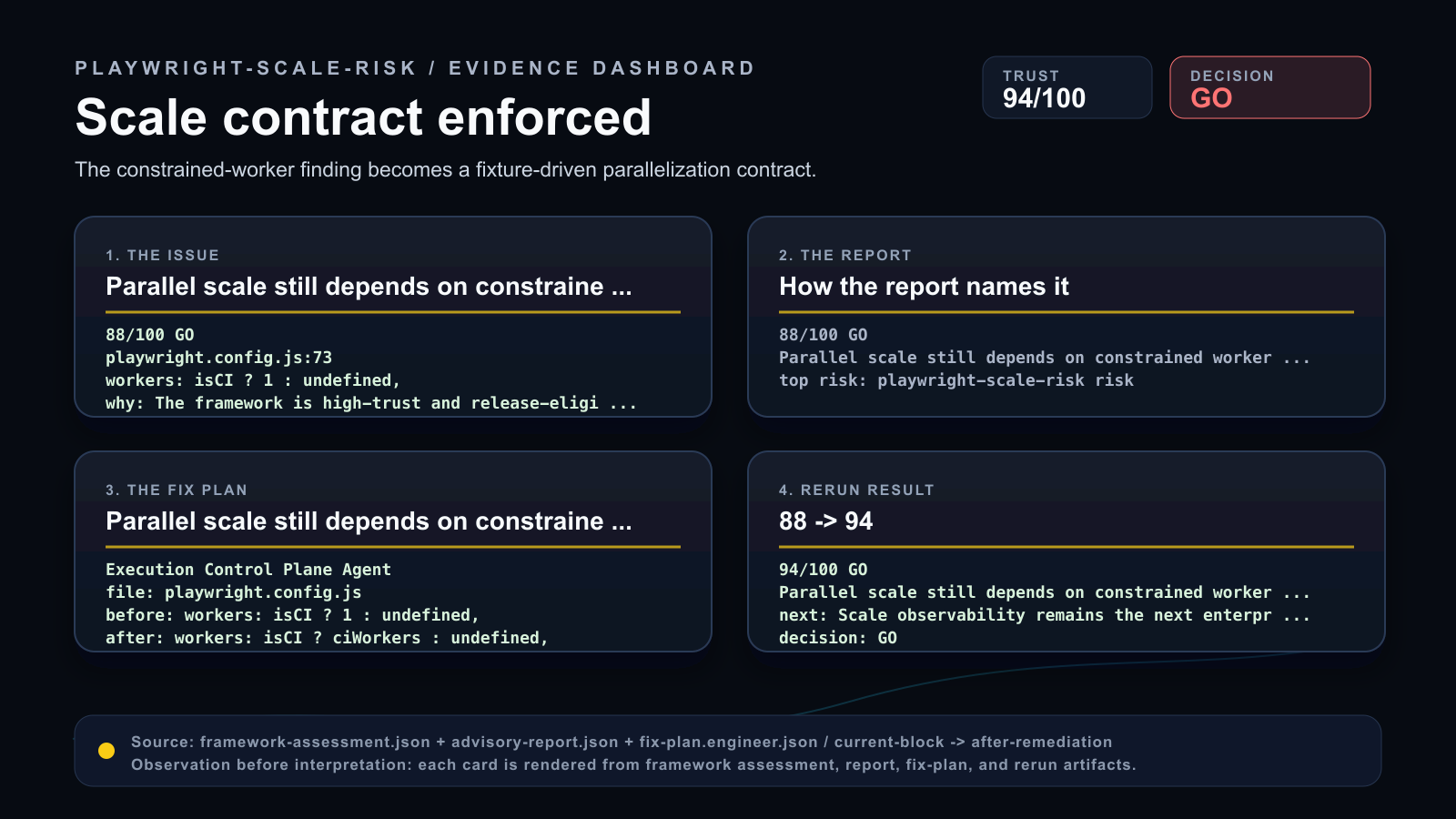
Keep Playwright Fast Without Losing Trust
Parallel scale still depends on constrained workers
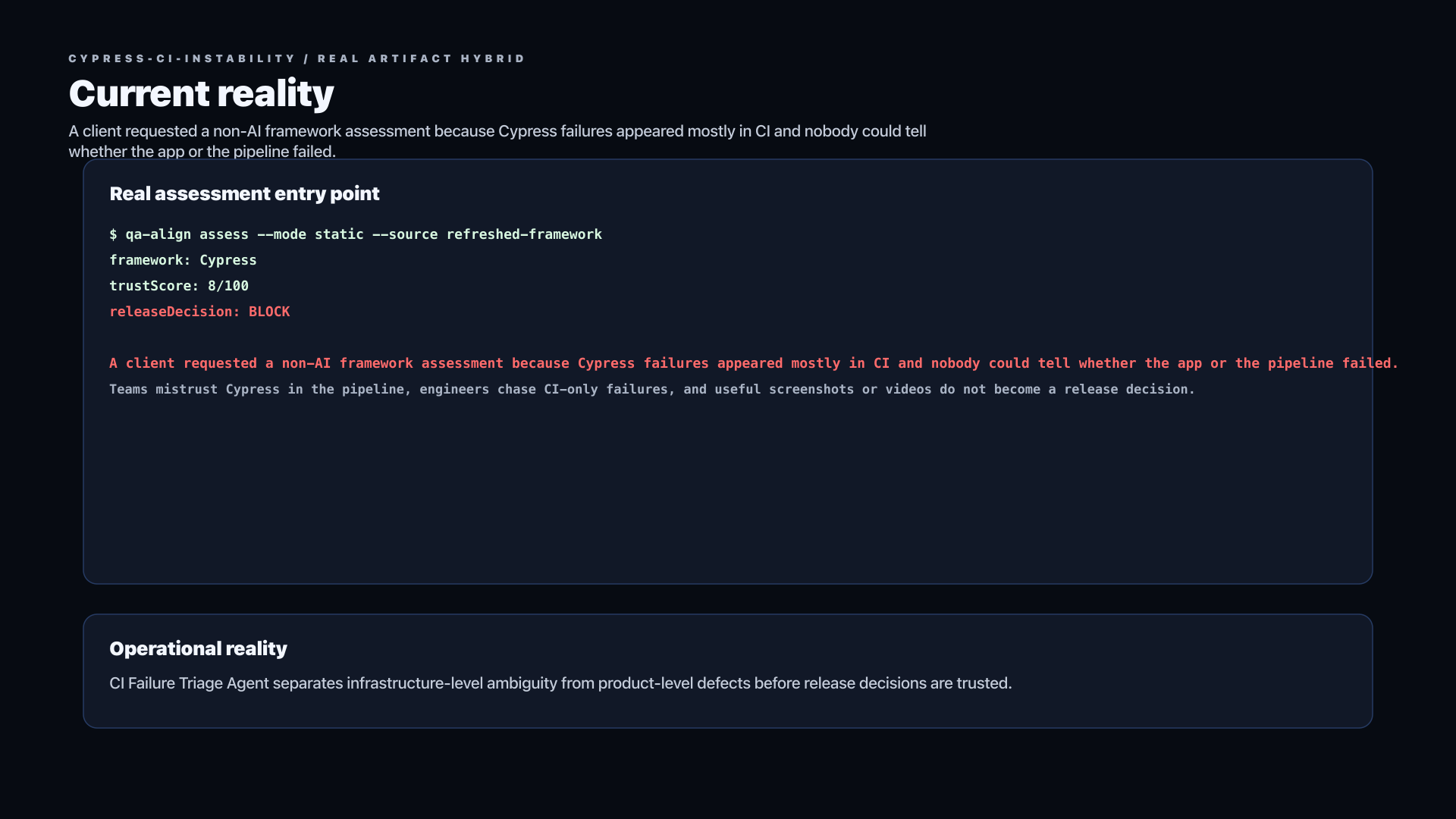
Diagnose Cypress CI Instability Before It Spreads
cypress-ci-signal-ambiguity
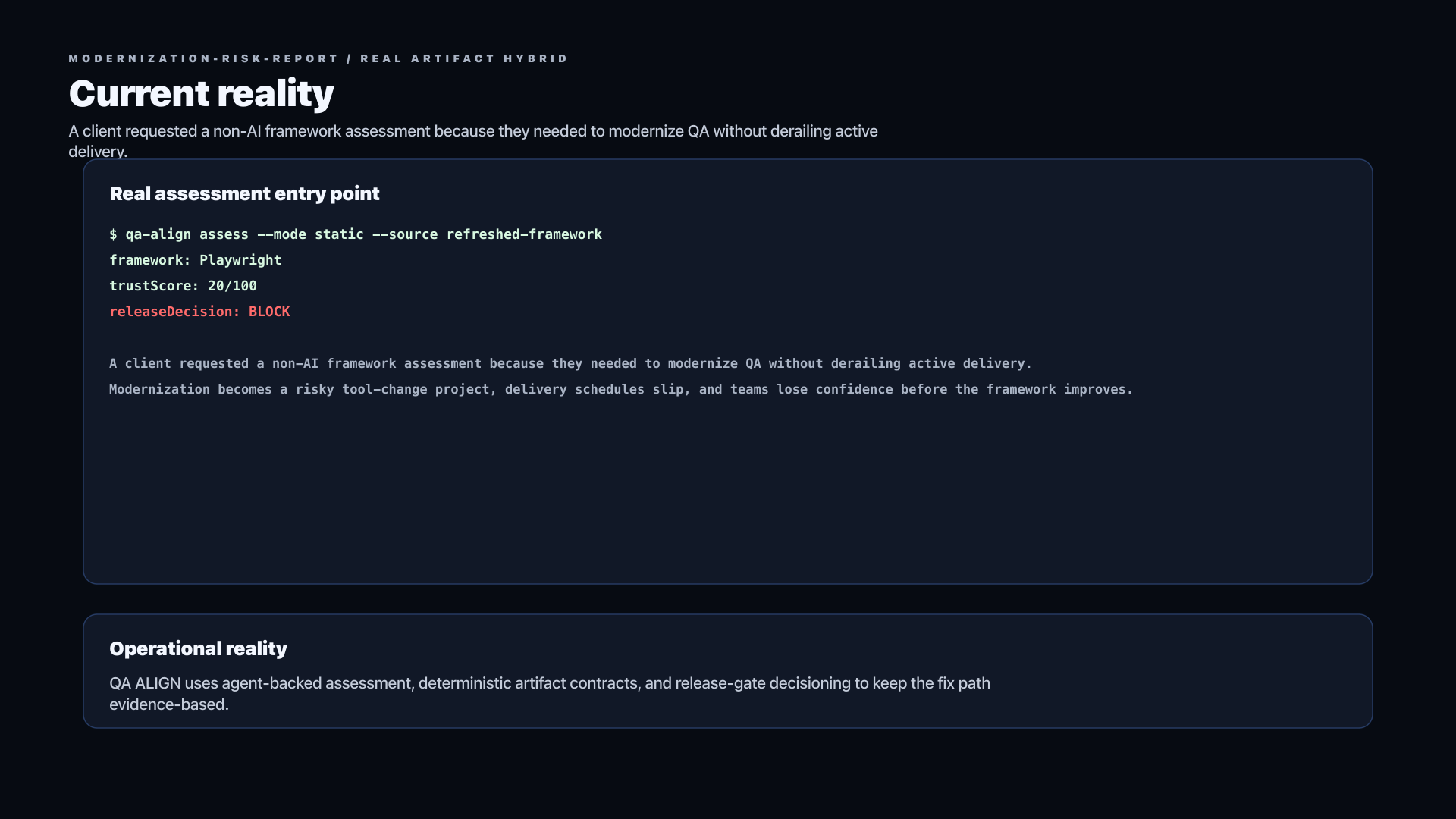
Modernize Automation Without Creating Delivery Risk
Environment contract partially enforced
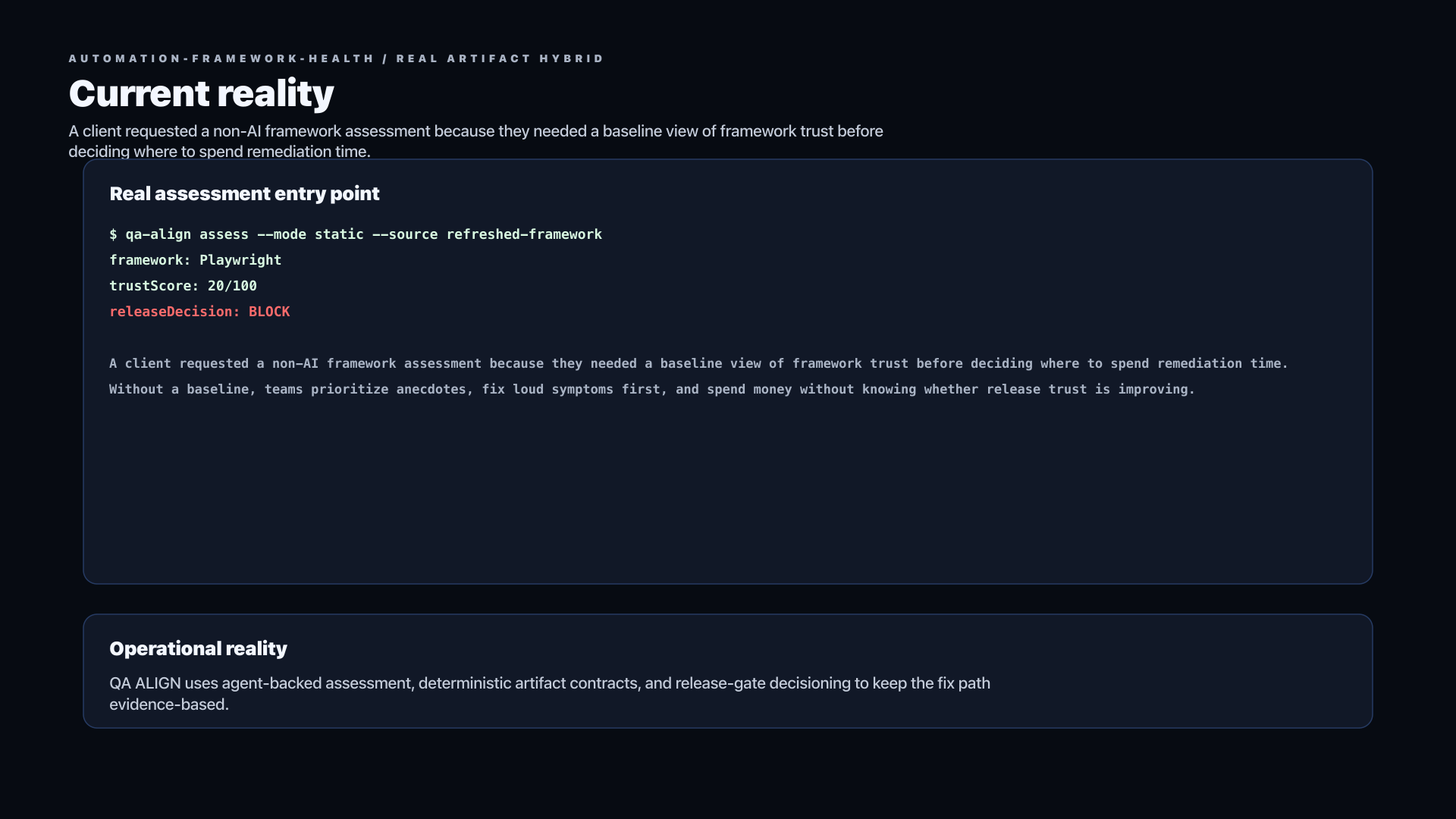
Get a Baseline Trust Report for Your Automation Framework
low automation framework health baseline
What QA ALIGN changes
QA ALIGN is not generic QA automation. It is a modernization system designed to improve trust, diagnosability, and release decision clarity.
- API-first state setup
- Artifact-driven failure analysis
- Structured failure outputs
- CI-integrated diagnosability
- Release gate decisioning
- Phased modernization paths
Choose the right modernization path
Once the first problem is clear, the next step is choosing the right modernization style.
Agentic QA
Give agents goals, execution authority, and maintenance work while keeping evidence contracts and human release approval in control.
- Goal-driven test planning
- Bounded agent permissions
- Structured evidence contracts
- Human approval gates
- Auditable maintenance
No AI
Build a system you can trust step by step, with full transparency and no generated artifacts.
- Capability mapping
- Locator strategy
- Scenario design
- Deterministic test construction
- Clear execution and observation
Some AI
Introduce AI carefully where it helps, while keeping strict validation and human-readable structure.
- AI-assisted planning
- Validated locator suggestions
- Controlled generation
- Deterministic execution
- Failure analysis before trust
AI Forward
Move faster with AI-generated assets, while preserving control through validation, artifacts, triage, and release gates.
- Accelerated generation
- Validation layer
- Structured artifacts
- Automated triage
- GO / WARN / BLOCK release logic
Trust level determines where we start
Before introducing speed, scale, or AI, the first question is simple: how much can your team trust the current system?
Tests are flaky, failures are unclear, and results are not yet safe to use for release decisions.
How we respond: Start with diagnosability, flake elimination, and state control.
Tests mostly work, but the system still has drift, partial confidence, or inconsistent release signal.
How we respond: Tighten state control, formalize release gates, and improve consistency.
Tests are stable, diagnosable, and already contribute to release confidence.
How we respond: Scale safely, optimize structure, and accelerate with confidence.
Every engagement starts with anti-pattern validation
Before recommending a sprint path, I assess the current system for the failure patterns that usually destroy trust first.
What I check first
- Shared state and order-dependent tests
- Brittle locator strategy
- Environment drift between local and CI
- Rerun-based debugging habits
- Lack of artifact-first diagnosability
- No usable release decision logic
What that produces
- Current trust level: low, medium, or high
- Recommended system path
- Recommended sprint entry point
- Immediate next step for the first week
Where the sprint system fits
Each assessment identifies the most valuable sprint entry point based on the risks observed in the framework.
Typical low-trust entry
- Sprint 3: CI Diagnosability
- Sprint 4: Flake Taxonomy and Guardrails
- Sprint 5: Test Data and State Reset
Typical acceleration path
- Sprint 6: Time-to-Signal and Release Gates
- Sprint 14: Agent Artifact Contract and Failure Taxonomy
- Sprint 15–17: Triage and release decision automation
Start with a Technical Signal Review
A good first step is not a rewrite. It is a focused review of your current automation signal.
- Current trust level
- Key anti-patterns
- Likely sprint entry point
- Recommended modernization path
- First correction priority