






Selenium Suite Governance

Turn Years of Selenium Coverage Into a Suite Your Team Can Maintain

QA ALIGN identifies which Selenium coverage still protects releases, which tests create maintenance drag, and whether the suite should be tuned, retired, modernized, or selectively migrated.

External report for the client. Internal engineer fix document is created after approval to accelerate remediation.

Experienced improving systems for:

What QA ALIGN queries

Anti-patterns hiding inside the current framework

  • Historical coverage grows faster than its release value can be reviewed
  • Polling, synchronization, and observability patterns are not ready for WebDriver BiDi
  • Driver, browser, and CI versions drift without clear ownership
  • Brittle locators, slow setup, and weak artifacts multiply maintenance effort
  • Retirement and migration decisions are based on frustration instead of evidence
What the client receives

An external report with issues, trust level, and prices

  • Detected framework anti-patterns with affected areas
  • Current framework trust level
  • Issue evidence and severity
  • Weighted prices to fix the recommended changes
  • Recommended first remediation path

Sample finding

Selenium 4 removed the runtime blocker; synchronization debt remains

The real repair loop moved the suite from 30/BLOCK to 73/WARN. Hard sleeps, legacy browser-driver packages, and fragmented window cleanup remain measurable readiness risks.

Current earned finding

The suite is now ready for governed modernization work, but a completed BiDi migration is not claimed until the remaining contracts and runtime verification are complete.

Current assessment scenario

Selenium 3 To BiDi Readiness Assessment Story

A team inherited years of Selenium coverage that still protects important flows, but the suite cannot safely adopt modern protocol capabilities while its runtime and synchronization contracts remain ungoverned.

Selenium 3 To BiDi Readiness Assessment Story assessment evidence preview
What QA ALIGN found

QA ALIGN assessed the suite at five correction landmarks. The baseline found Selenium 3 runtime debt, no BiDi readiness contract, and systemic hard sleeps. The repair loop introduced the readiness contract, moved the suite to Selenium 4, and reduced synchronization debt without hiding the remaining blockers.

Evidence reviewed
  • Five real advisory reports
  • Selenium package and browser-driver evidence
  • Hard-sleep counts with affected file references
  • 30/BLOCK to 73/WARN score movement
Assessment decision

The current suite is 73/WARN. Selenium 4 removed the runtime blocker, but a completed BiDi migration is not claimed while synchronization debt, legacy browser-driver packages, and fragmented window cleanup remain.

Legacy Selenium Risk proof

Four real snapshots from the Legacy Selenium Risk fix.

The evidence follows the real framework finding through assessment, engineering remediation, and a rerun showing trust improved from 30 to 73 while release is WARN.

Legacy Selenium Risk raw issue evidence

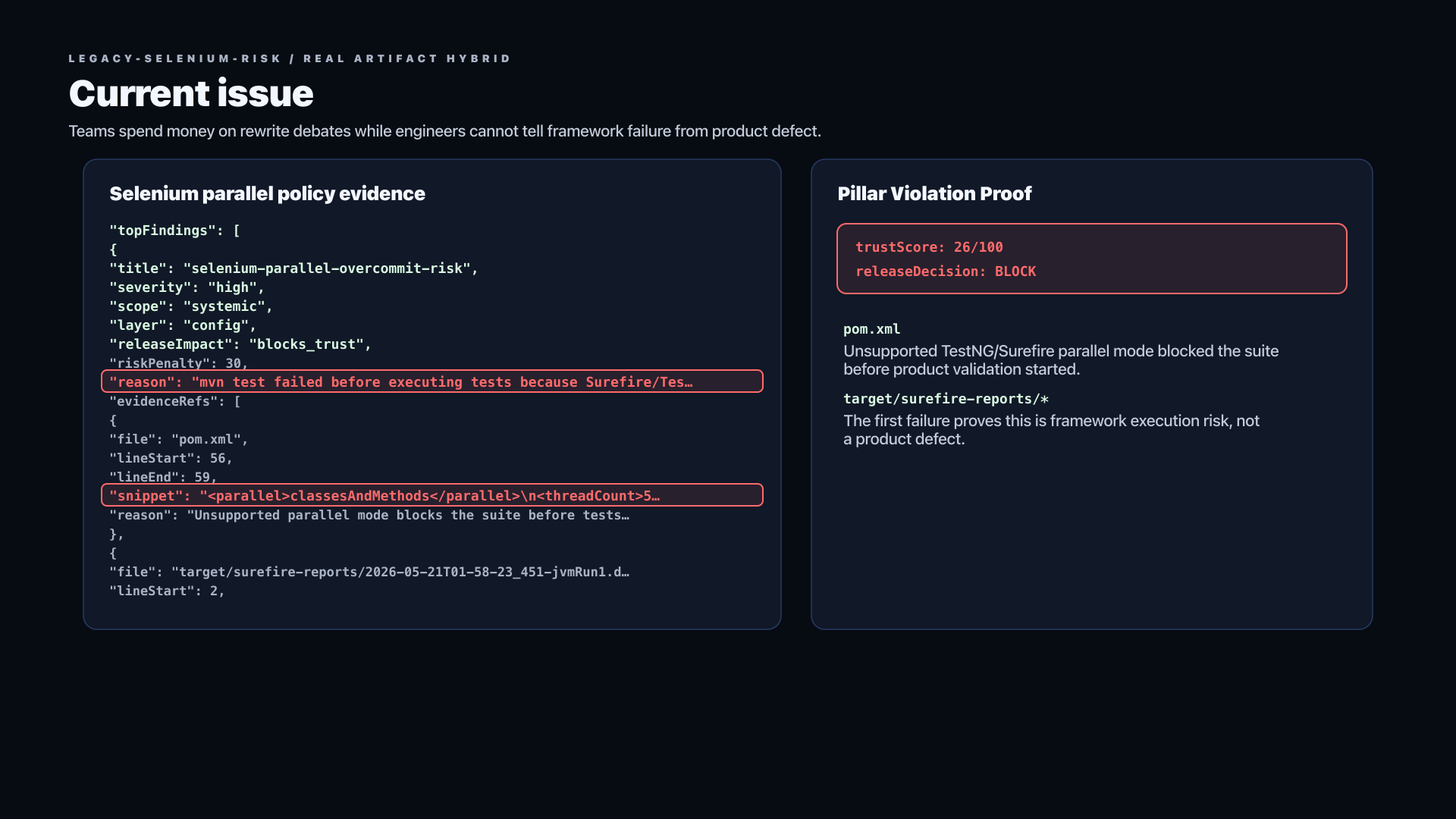
1. The issue in JSON

The baseline snapshot shows the top finding: selenium-parallel-overcommit-risk.

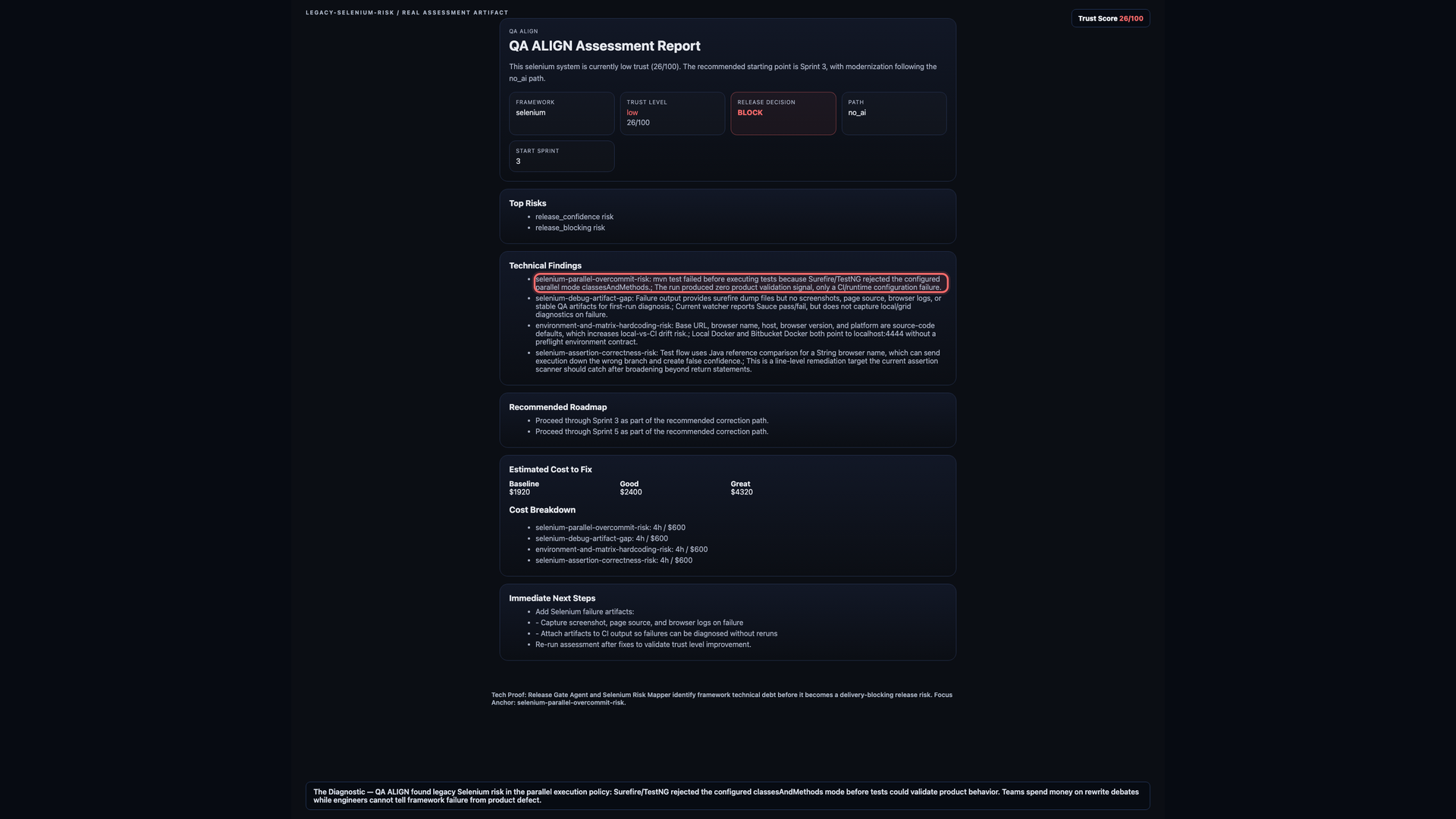
Legacy Selenium Risk assessment report naming the issue

2. How the report names it

The client report names the issue inside the 30/100 assessment and ties the recommendation directly to the observed finding.

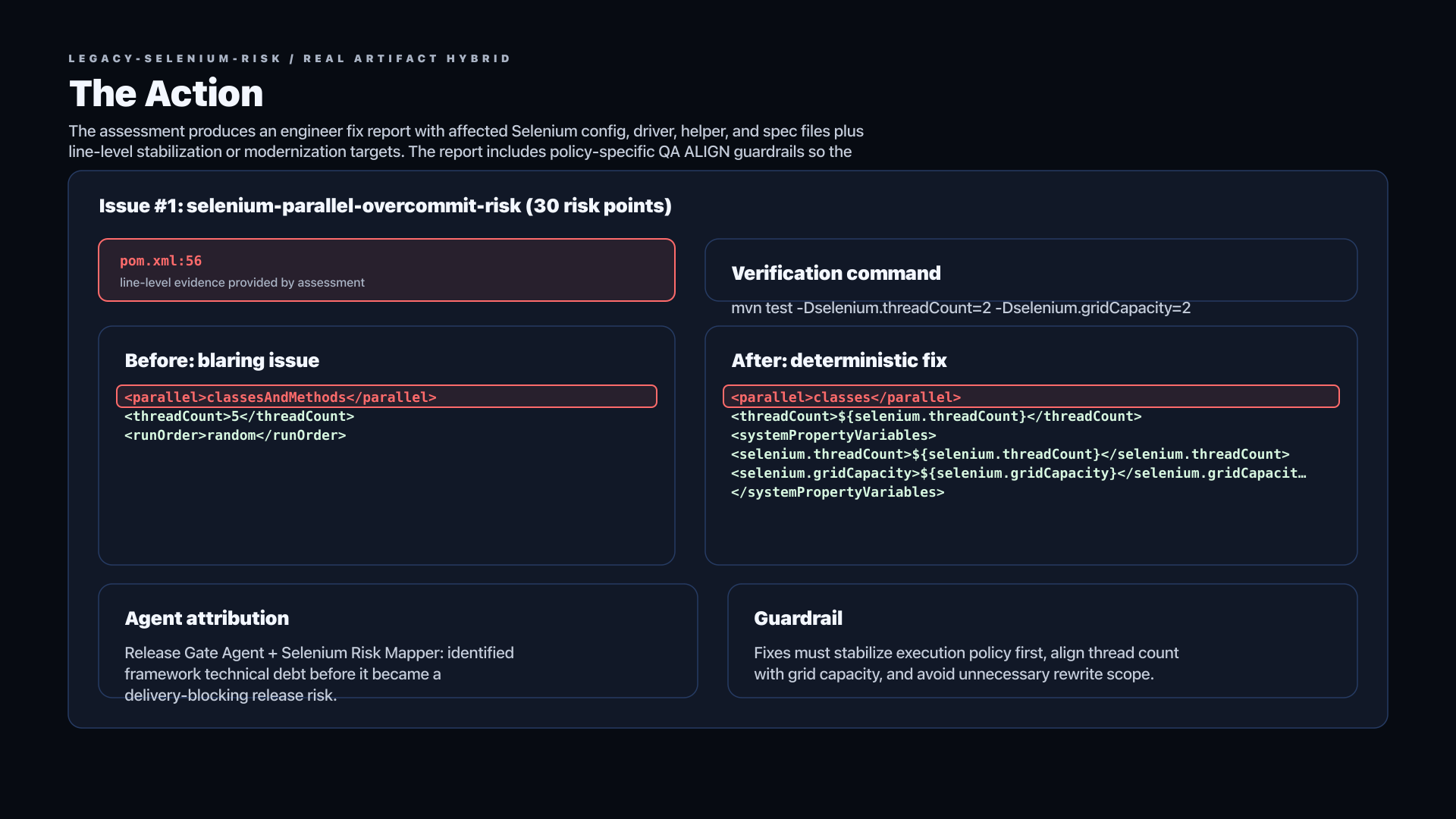
Legacy Selenium Risk engineer fix plan for the issue

3. What the fix plan says

The engineer fix plan focuses the remediation on this specific issue instead of drifting into a generic framework cleanup.

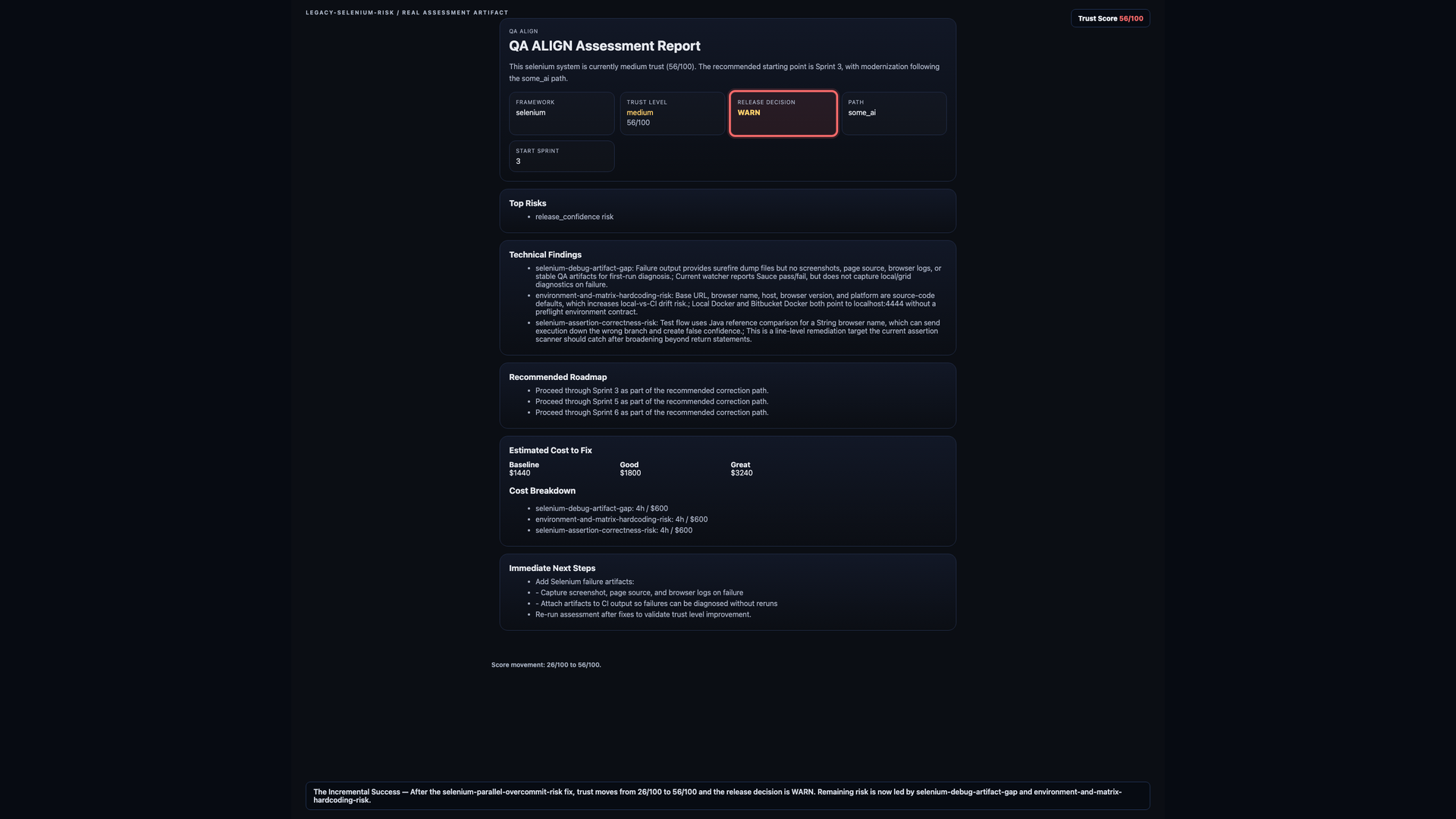
Legacy Selenium Risk rerun report after remediation

4. New report after rerun

After the fix, the rerun report shows trust improved to 73/100 and the release decision is WARN. The next highest risk is polling-based synchronization debt.

Report outcomes

Know what is breaking trust before buying remediation

  • Know which Selenium coverage still earns its maintenance cost
  • Assess WebDriver BiDi readiness and current synchronization debt
  • See what to preserve, tune, retire, modernize, or selectively migrate
  • Review weighted pricing for a well-tuned Selenium suite
  • Give engineers an internal fix path after approval

Request the report

Only your email is required to begin. Add technical context only if it is useful.

Add optional context

Private intake. The external report is for your team. Internal engineer fix docs are not public-facing.