






Slow Feedback Loops

Shorten the Time Between Failure and Action

Get a report that shows which framework anti-patterns make automation feedback slow, expensive, or too late to protect delivery.

External report for the client. Internal engineer fix document is created after approval to accelerate remediation.

Experienced improving systems for:

What QA ALIGN queries

Anti-patterns hiding inside the current framework

  • Long-running suites without risk-based grouping
  • Slow setup and teardown repeated across every test
  • Failures discovered late because fast checks are not separated
  • Parallelization creates instability instead of faster signal
  • Reports do not identify where time is being lost
What the client receives

An external report with issues, trust level, and prices

  • Detected framework anti-patterns with affected areas
  • Current framework trust level
  • Issue evidence and severity
  • Weighted prices to fix the recommended changes
  • Recommended first remediation path

Sample finding

The suite is organized by history, not signal

Old suite structure often reflects how tests were added, not what release decisions need. QA ALIGN checks whether test grouping supports fast, useful feedback.

Detected anti-pattern

The report prices fixes that improve time-to-signal while preserving evidence quality.

Current assessment scenario

Slow Feedback Loops Client Assessment Story

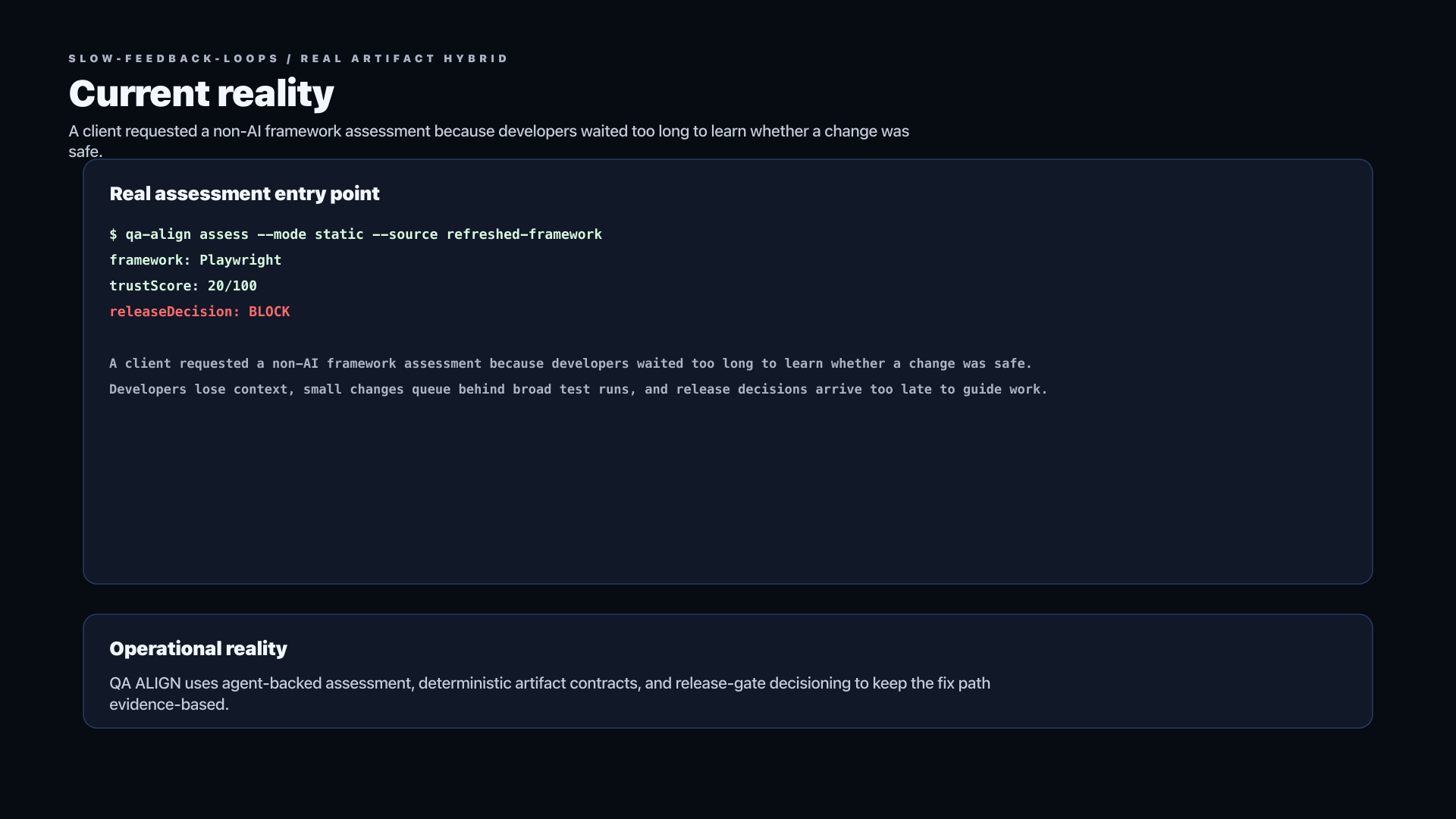
A client requested a non-AI framework assessment because developers waited too long to learn whether a change was safe.

Slow Feedback Loops Client Assessment Story assessment evidence preview
What QA ALIGN found

QA ALIGN found slow time-to-signal patterns in suite structure, CI timing, setup cost, artifact generation, or oversized release checks. The assessment produces an engineer fix report with affected CI, suite, setup, and reporting files plus line-level targets for shortening the path from failure to action.

Evidence reviewed
  • CI timing metadata
  • Slow suite/spec findings
  • Affected pipeline or suite line numbers
  • Rerun time-to-signal result
Assessment decision

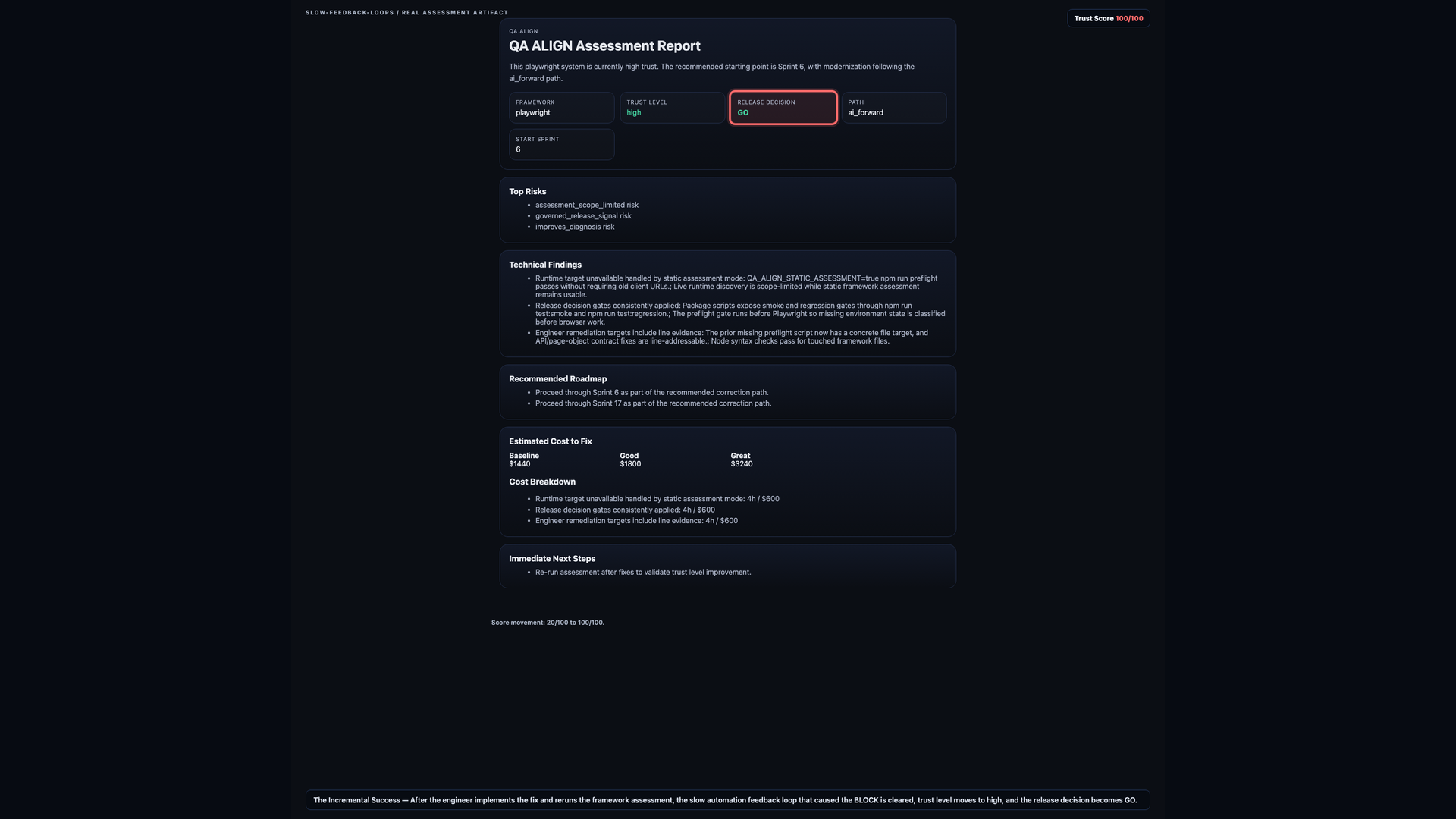
After the engineer implements the fix and reruns the framework assessment, the slow automation feedback loop that caused the BLOCK is cleared, trust level moves to high, and the release decision becomes GO.

Slow Feedback Loops proof

Four real snapshots from the Slow Feedback Loops fix.

The evidence connects the raw issue, assessment report, engineer fix plan, and rerun result.

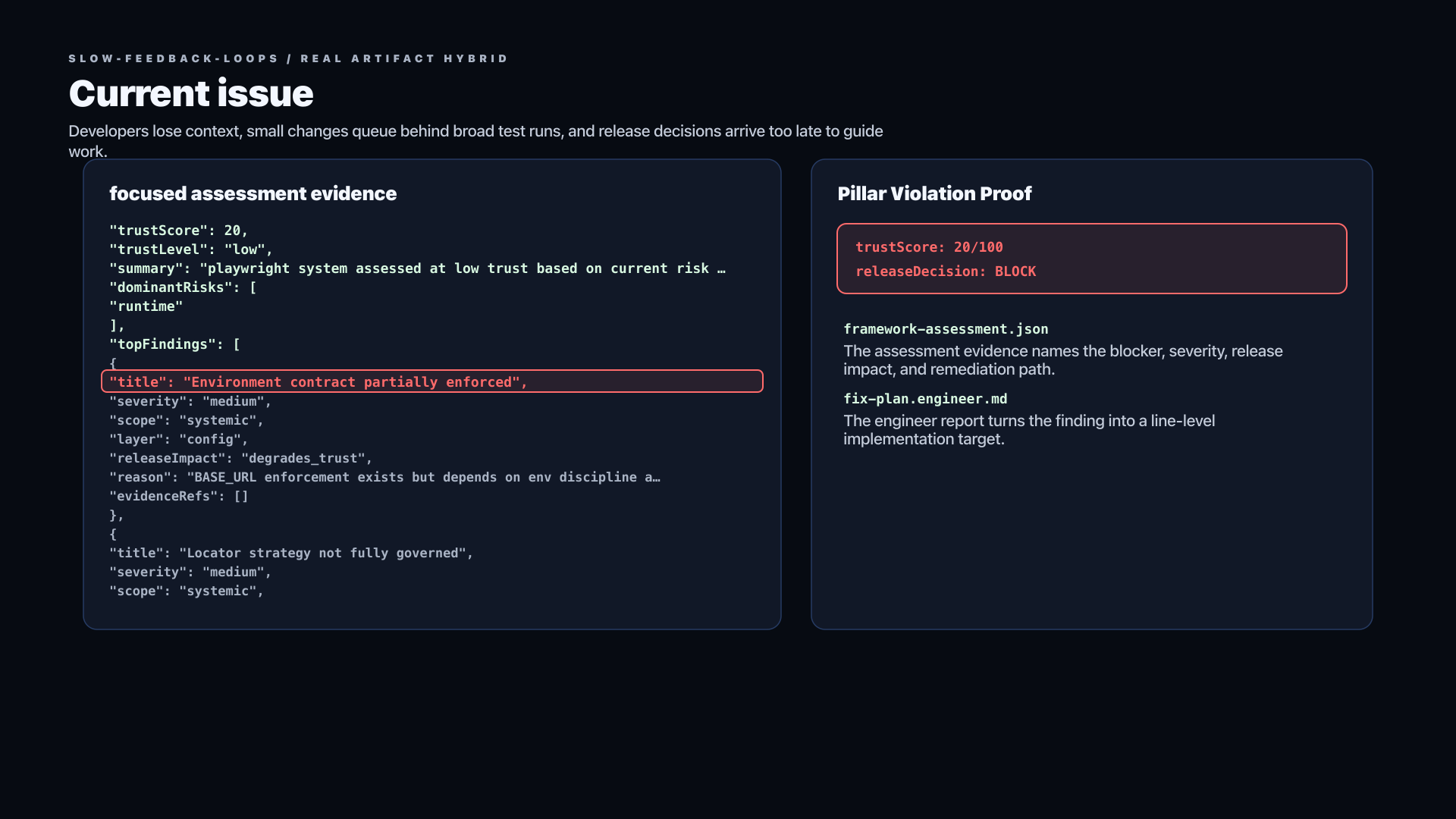
Slow Feedback Loops raw issue evidence

1. The issue in JSON

The baseline snapshot shows the top finding: Environment contract partially enforced.

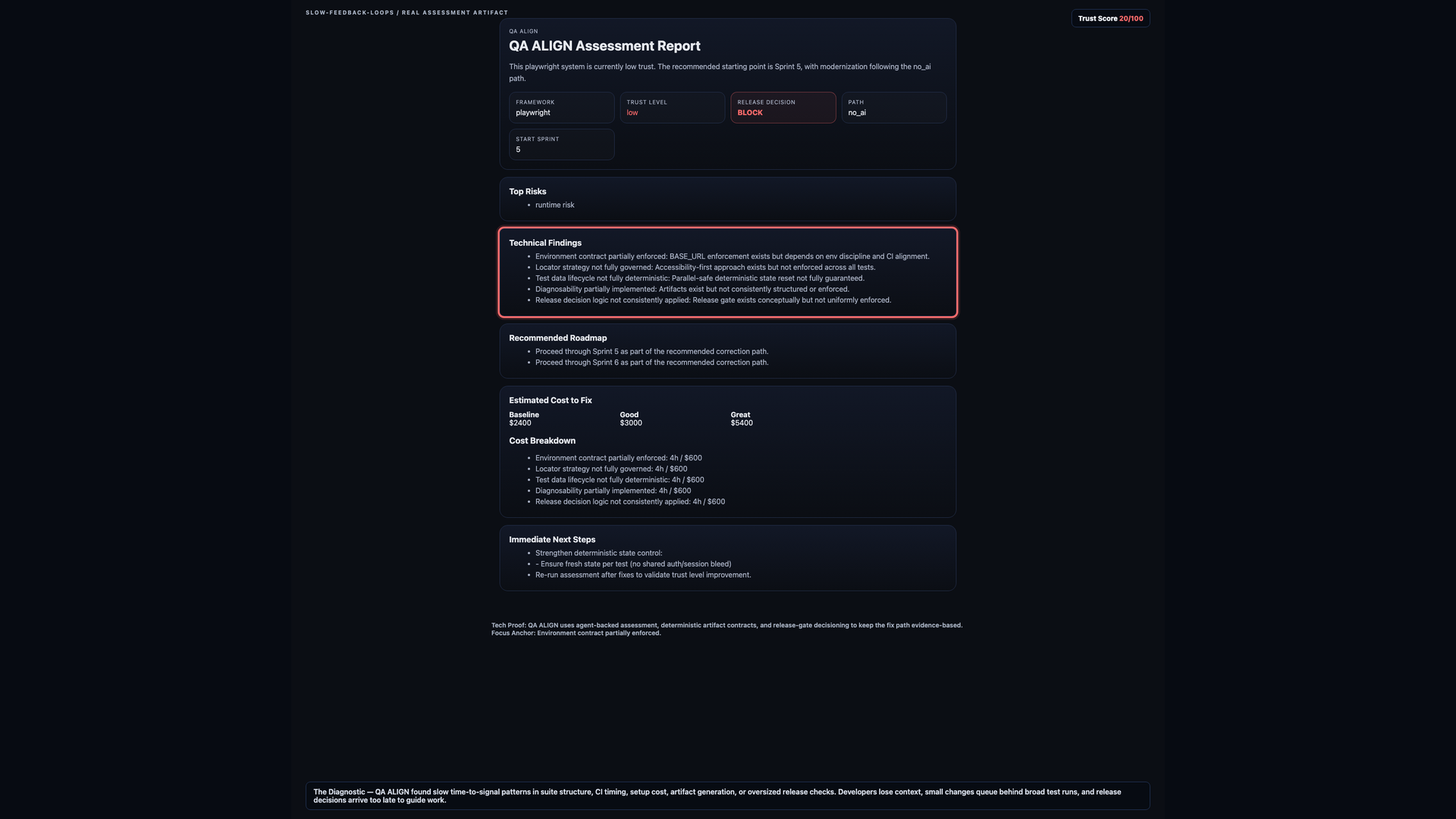
Slow Feedback Loops assessment report naming the issue

2. How the report names it

The client report names the issue and ties the recommendation directly to the observed finding.

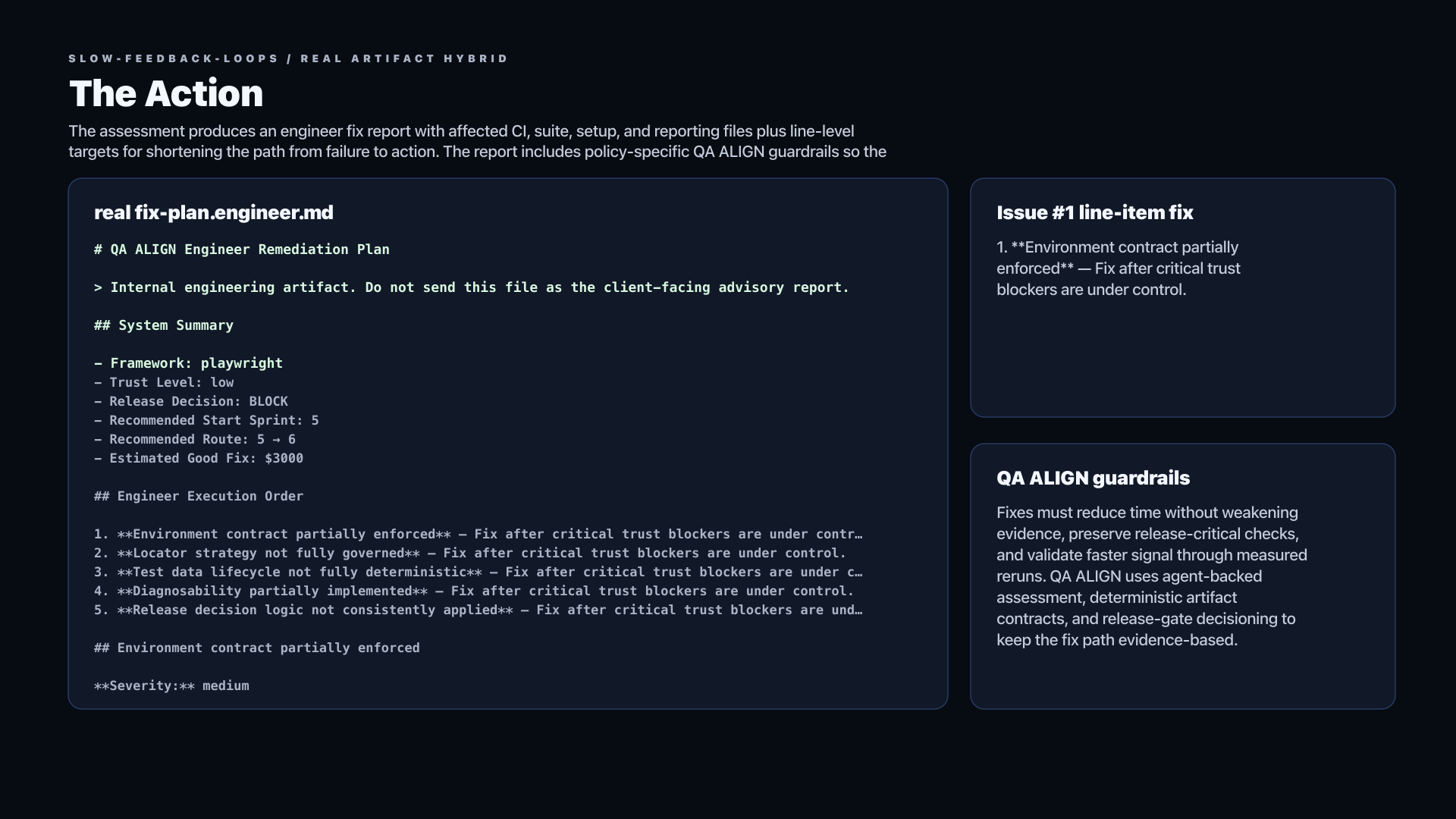
Slow Feedback Loops engineer fix plan for the issue

3. What the fix plan says

The engineer fix plan focuses the remediation on this specific issue instead of drifting into a generic framework cleanup.

Slow Feedback Loops rerun report after remediation

4. New report after rerun

After the fix, the rerun report shows the updated trust state and the next highest-priority risk.

Report outcomes

Know what is breaking trust before buying remediation

  • See which parts of the framework slow feedback the most
  • Understand whether slowness is setup, data, environment, or suite design
  • Know which fixes improve speed without lowering trust
  • Review weighted pricing for feedback-loop improvements
  • Give engineers a focused internal optimization plan

Request the report

Only your email is required to begin. Add technical context only if it is useful.

Add optional context

Private intake. The external report is for your team. Internal engineer fix docs are not public-facing.